Roof Renovation: Repair, Re-Roof, or Rebuild What's Up There
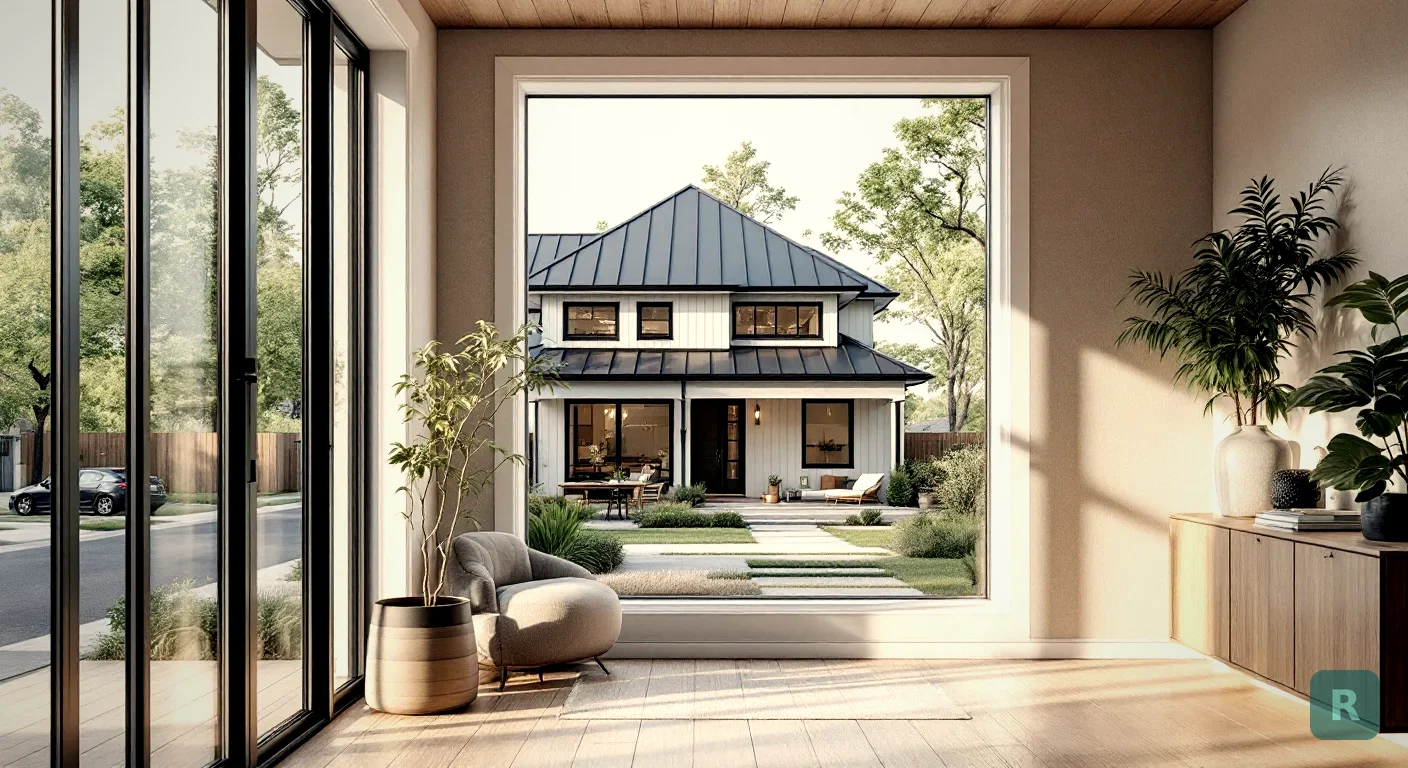
Three homeowners can say “roof renovation” and mean three completely different jobs. One has a leak over the back bedroom. One has a 25-year-old roof that’s curling at the edges. One wants to swap brown asphalt for a charcoal metal roof that changes how the whole house looks from the street.
Those jobs don’t cost the same, don’t take the same crew, and don’t get bid the same way. Knowing which one you’re asking for is the first step to getting bids you can actually compare.
Key Takeaways
- A roof renovation is one of three jobs: a repair, a re-roof (overlay or tear-off), or a renovation that changes the material, color, or structure.
- Building code generally caps you at two layers of roofing. If you already have two, it’s a tear-off.
- The decking under the shingles is where the surprise money hides. Get a per-sheet replacement price in writing before work starts.
- A typical 2,000 square foot asphalt roof runs about $9,000 to $25,000, before tear-off and decking.
- The roof is a big chunk of what you see from the curb, so test colors on a photo of your actual house before you order.
”Roof Renovation” Means Three Different Jobs
Before you call anyone, figure out which bucket you’re in. The bucket sets the budget more than any shingle brand will.
| Repair | Re-Roof | Renovation | |
|---|---|---|---|
| What it is | Fix a leak, replace damaged shingles or flashing | New roof covering, same material and shape | New material, new color, or changes to the structure |
| Who it fits | Roof under about 15 years old with one problem spot | Roof at the end of its life, house you're happy with | Roof at end of life plus a curb appeal or performance goal |
| What gets opened | Just the problem area | The whole roof, sometimes down to the deck | Everything down to the deck, sometimes the framing |
| Permit | Often not, check locally | Usually yes | Yes |
The repair bucket is the one people talk themselves out of too fast. If the roof is fairly young and the leak is around a vent pipe or a chimney, a good repair is the honest answer. Not every leak means a new roof.
The renovation bucket is the one people underestimate. Changing from asphalt to metal or tile isn’t a color swap. It can change the weight on your framing, the underlayment, the flashing details, and the trim.
Overlay or Tear-Off: The Two-Layer Rule
If you’re re-roofing with asphalt shingles, somebody will probably offer to lay the new roof right over the old one. It’s called an overlay or a recover. It’s cheaper because nobody pays to strip and haul off the old shingles.
The residential code also bars a recover over a roof that’s water-soaked or deteriorated. That’s the catch most overlay pitches skip. If the reason you’re re-roofing is that water is getting in, an overlay just traps the problem under a nice new surface.
I’d push for a tear-off in most cases, even when an overlay is allowed. You can’t inspect a deck you can’t see. And a new roof on top of a bad deck is a new roof with an old problem underneath it.
Have the roofer pull back a few spots at the edge and count. Some inspectors want proof there's only one existing layer before they'll sign off on an overlay. If the bid assumes one layer and there are two, the price is about to change.
Local building departments can amend these rules. Your roofer should know what your jurisdiction requires, and so should the permit office.
What’s Under the Shingles Sets the Real Price
Under every roof is a deck of plywood or OSB sheathing. That’s what the shingles are nailed to. Nobody knows what shape it’s in until the old roof comes off.
I’ve been burned bidding remodels where the hidden scope blew up once the walls came open. Rot, old wiring, plumbing that wasn’t up to code. Roofs work the same way, and in the Pacific Northwest, where I work, moisture and rot are the number one enemy of every house.
Angi puts a full roof redeck at $2,600 to $9,000. Most tear-offs only need a few sheets swapped. Some need a lot more.
Ask every roofer for a per-sheet price to replace bad decking, written into the contract. Then ask how they'll show you the damage, ideally with photos before the new sheets go down. A bid with no decking line isn't cheaper. It just hasn't told you the price yet.
This is exactly where the lowball bid gets you. A shady contractor leaves decking out to look like the best deal, then hits you with a change order when your roof is open to the sky. At that point you’re not shopping anymore. You’re paying whatever they say, because the rain is coming.
Other things that hide up there and change the price:
- Flashing at chimneys, skylights, and walls that’s rusted or was never installed right
- Ventilation that’s missing or blocked, which cooks shingles from below and can cause moisture in the attic
- Gutters and fascia that are rotted where water has been running behind them for years
What a Roof Renovation Costs
Roofers price by the square, which is 100 square feet of roof surface. Your roof surface is bigger than your house’s footprint once you add pitch and overhangs. Always ask how many squares the roofer measured. That number lets you compare bids line by line.
Here’s what a 2,000 square foot roof (20 squares) looks like using Inch Calculator’s installed price ranges:
Those ranges are wide for real reasons. Steep pitch, two stories, lots of valleys and dormers, and tight access all push labor up. Labor is roughly 40 to 50 percent of the install price, so a roof that’s hard to stand on costs more no matter what goes on it.
Then add your contingency. Same rule I give for any remodel: know your real budget and add 15 to 20 percent for surprises. On a roof, the surprise is almost always the deck.
Changing the Material Changes More Than the Look
This is where a re-roof turns into a true renovation. Moving to metal, tile, or shake can be a great call. It just isn’t only an aesthetic call.
- Weight. Tile is a lot heavier than asphalt. Framing that was sized for shingles may need an engineer’s review, and possibly reinforcement, before tile goes on.
- Details. Metal roofs need their own flashing, trim, and fastening system. A crew that’s great with shingles isn’t automatically great with standing seam.
- Noise and climate. I’ve lived and worked everywhere from Hawaii and Guam to Alaska. Materials behave differently in salt air, heavy snow, and nonstop rain. Ask your roofer what holds up in your climate, not what looks best in a catalog.
If your goal is curb appeal, think about the whole exterior at once. Our exterior remodel guide covers the order of operations, and roof before siding is the rule for a reason. Water runs down. If you’re working on a dated 1960s or 70s house, the 70s house exterior makeover post covers how roof color ties into paint and brick.
Pick the Roof Color With the Whole House in the Frame
Here’s the part people rush. You pick a roof from a sample chip the size of a playing card, standing in a showroom or squinting at a brochure. Then you live with it for 20 years or more.
The roof is a huge part of what you see from the curb, and it has to work with siding, trim, brick, and the front door. A charcoal roof makes white siding pop. A brown roof can make the same siding look dingy. You won’t know until you see it on your house.
That’s what ReVision AI is built for. Take a photo of the front of your house from across the street, then try a style or type a custom prompt like “charcoal standing seam metal roof with black gutters.” You see your house, not a stock photo of somebody else’s. If you want to see the exterior side of the app, the exterior paint visualizer post walks through it, and the AI renovation post covers how the whole process works.
Mediterranean usually means tile. Modern farmhouse often means dark metal or dark architectural shingles. The style you’re chasing can decide the material for you, which loops right back to weight and budget.
Your Roof Renovation Checklist
- Decide your bucket: repair, re-roof, or renovation
- Find out how many layers are on the roof now
- Get at least 3 bids that measure the same number of squares
- Make sure every bid includes tear-off, underlayment, flashing, and ventilation
- Get a per-sheet decking replacement price in writing
- Ask about permits and who pulls them
- Check licenses, insurance, and the workmanship warranty, not just the shingle warranty
- Test roof colors on a photo of your actual house before you order
- Set aside 15 to 20 percent for what's under the shingles
Good, fast, or cheap. You can pick two, and on a roof, cheap is the one that comes back to bite you. If this were my mom’s house, I’d want a tear-off, a decking price in writing, and a color she’d already seen on her own home.
Curious how a new roof would look on your house? Try it free with ReVision AI. You get 3 free transformations, and Pro is $4.99 a month if you want to keep going.
Get Design Inspiration Weekly
Fresh room makeover ideas, renovation tips, and style guides delivered to your inbox.
Design tips and inspiration only. Unsubscribe anytime.
Related Articles
House Modification for Aging in Place: What to Change, Room by Room
A house modification plan for aging in place: ramp math, door widths, first-floor living, kitchen changes and who helps pay, room by room, from a carpenter.
9 min readGAF Virtual Remodeler: How to Use It and What It Won't Tell You
How to use the GAF Virtual Remodeler to try shingle colors on a photo of your own house, the photo tips that matter, and what to check before you buy.
7 min readGreen Remodeling: What Actually Saves Energy, Water and Waste
Green remodeling from a third-generation carpenter: keep what works, fix the walls while they're open, pick efficient fixtures, and skip the eco upsells.
8 min read