70s House Exterior Makeover: What Makes It Look Dated and What Fixes It
- A 1960s or 70s house usually looks dated because of five or six specific things, not because of the house itself
- Take things off before you add anything. Fake shutters, iron columns and overgrown shrubs are free to remove
- Color is the cheapest big change, but test it first, and treat any pre-1978 paint as lead until proven otherwise
- The front door and garage door are the two most visible pieces on most of these houses, and both pay back well
- Picture the whole facade on your actual house before you buy a single gallon or door
Drive any neighborhood built between 1960 and 1980 and you’ll see the same house fifty times. Long low roof. Brown trim. A strip of brick across the bottom, something else above it. Two shutters that couldn’t close if you paid them.
Here’s what I tell homeowners about those houses. They aren’t ugly, they’re unedited. The bones are usually fine. What dates them is a short list of choices that made sense in 1974 and stuck around because nobody ever took them off.
The exterior makeover that works almost never starts with new siding. It starts with figuring out which parts are saying “1974” and dealing with those first. I covered ranch interiors in my ranch remodel post. This one stays outside, for ranches, split levels, raised ranches and brick ranches.
The Seven Things That Date a 70s House From the Street
Stand at the curb with your phone and look for these. Most houses from this era have at least four.
- Earth tone trim. Chocolate brown, harvest gold, avocado, rust. Often all on one house.
- Too many materials. Brick wainscot, then painted panel siding, then a stained board on the gable, then a stone planter.
- Decorative shutters. Wrong size for the window, screwed flat to the wall, often vinyl in a color that doesn’t match anything.
- Aluminum slider windows with no trim. Thin frames, no casing, so the windows read as holes punched in the wall.
- A dark, narrow front door tucked under a two foot overhang, with no real place to stand.
- Wrought iron. Scrolled porch posts, railings, sometimes a matching mailbox.
- Foundation shrubs planted in 1975. They were 2 feet tall then. Now they cover half the windows.
Notice what’s not on the list. The roof shape, the window locations, the footprint. The expensive stuff is rarely the problem. That’s good news for your budget.
Take Things Off Before You Add Anything
The first phase of a 70s house exterior makeover costs almost nothing. It’s subtraction.
Pull the fake shutters and patch the screw holes. Take out the overgrown junipers and boxwoods hiding the foundation. Replace scrolled iron porch posts with simple square wood or wrapped posts. Take down the coach lights that are rusted shut.
No new materials except paint and two posts. Some homeowners stop right there.
Color Does the Heavy Lifting
Paint is the cheapest change with the biggest effect on a long, low house. Fewer colors is almost always the answer. A 70s house usually has four or five colors fighting each other, and the fix is one body color, one trim color, and one door color.
Start with what you’re not changing. Your roof and brick colors are already decided, so the paint has to work with both. A swatch looks great on the counter and terrible next to a brown three tab roof.
Scraping and sanding the exterior of a 60s or 70s house can put lead dust all over your yard and your kids' sandbox. If you hire a painter, make sure the firm is EPA lead-safe certified. If you DIY, test first, wet-scrape, and catch the debris on plastic.
Brick: paint it, limewash it, or leave it
Brick is the hardest call on these houses. Once you paint brick, you’re painting it forever. Getting paint back off is slow, messy, and rarely clean. If you do paint it, use a coating made for masonry that lets moisture out, because brick holds water and regular house paint traps it.
Limewash is the middle option. It soaks in, wears gradually, and lets some brick texture show through. On a red brick wainscot it can calm the color down without hiding the material.
Then there’s the third choice, and I’d test it before anything else. Leave the brick and change everything around it. A deep color on the siding above red brick often makes the brick look intentional instead of dated. If you want to try colors on your house, my AI exterior paint visualizer post walks through how I do it with homeowners.
The Front Door and Garage Door Are Half the Facade
On most 60s and 70s houses, the garage door is the single biggest thing facing the street. And the front door is where every eye lands. Change those two and the house reads like a different decade.
The 2025 Cost vs. Value report backs this up. Both projects were near the top of the list nationally for how much of the cost comes back at resale.
Your price will vary with your market and the door. The point is the ratio. Roughly $7,000 for the two most visible surfaces on the house is a different conversation than $40,000 for siding.
Pick a garage door with a flat or long-panel design. Skip the carriage house look on a ranch, it fights the horizontal lines. For the front door, add a sidelite or at least pick a door with glass so the entry isn’t a dark slot.
Windows and Trim: Make the Small Windows Look Intentional
Most of these houses have small horizontal windows, often original single-pane aluminum sliders. You have three levels of fix.
- Add wide trim. A 4 to 5 inch flat casing around a small window makes it look planned. This is the cheapest one.
- Replace the units in the same openings. New frames, better glass, cleaner sightlines, no structural work.
- Enlarge the front windows. Biggest visual change, and the most expensive, because you’re cutting new headers, patching siding and pulling a permit.
My window remodel post covers the difference. For a facade makeover, level one plus a door swap gets most people there.
Siding: When Paint Isn’t Enough
Sometimes paint can’t save it. Panel siding from this era, especially the grooved plywood kind, rots along the bottom edge where it sits close to the ground or on top of a trim board. In the Pacific Northwest where I work, moisture and rot are the number one enemy, and siding that looks fine from the street can be soft as cardboard along the bottom 6 inches.
Push a screwdriver into the bottom edge. If it sinks in, you need repair or replacement, not paint.
Some houses from this era have stiff, flat cement shingle siding, often with a wavy bottom edge or a dimpled texture. Older cement siding can contain asbestos. It's stable when left alone, but cutting, drilling or breaking it is a different story. Have a sample tested before anyone touches it.
If you do re-side, don’t add another material to a house that already has too many. Two exterior materials is plenty. Brick and one siding. Or one siding in two directions, like lap on the walls and vertical board and batten on a gable.
Split Levels and Raised Ranches Have Their Own Problem
A 70s split level or raised ranch has a different issue. The front door sits half a story up or down, and the facade looks like two houses stacked up. Brick below, siding above, different windows on each level.
The fixes that work on these houses:
- Give the entry a roof. A small gable or shed roof over the front door gives the eye a place to land and breaks up the flat face.
- Pick one dominant color for both levels. Painting the upper and lower levels the same color pulls the house together. A contrasting color on each level makes the split worse.
- Line up the trim. Matching window trim on both floors makes mismatched window sizes look less random.
For the inside, my split level remodel post covers walls, stairs and budgets.
Lighting, Numbers and the Small Stuff
Cheap, and they finish the job.
| Change | What It Fixes | Cost Level | DIY? |
|---|---|---|---|
| Remove shutters and iron | Visual clutter | Low | Yes |
| New porch and garage lights | Undersized, dated fixtures | Low | With an electrician for new boxes |
| Modern house numbers | Small detail people notice | Low | Yes |
| Exterior paint | Too many colors | Medium | Possible, mind the lead rules |
| Front door and garage door | The two biggest focal points | Medium | Hire it out |
| Window trim or new units | Small, flat windows | Medium to high | Trim yes, units no |
| New siding or bigger windows | Rot, mixed materials, scale | High | No, permits likely |
Buy a bigger porch light than you think. That coffee-can coach light is part of why the entry looks dated.
See the Whole Facade Before You Spend
Here’s the problem with doing this one piece at a time. You pick a paint color, then a door, then a garage door, and they don’t go together. Each decision looks fine alone and wrong as a set.
Most homeowners can’t picture the whole thing, and most contractors aren’t designers either. For years my answer was “go find some Pinterest photos you like,” which never showed anyone their own house.
That’s why I built ReVision AI. Here’s how I’d use it on a 70s exterior:
Stand across the street on an overcast day so the shadows don't hide the trim. Get the whole front, roof to driveway.
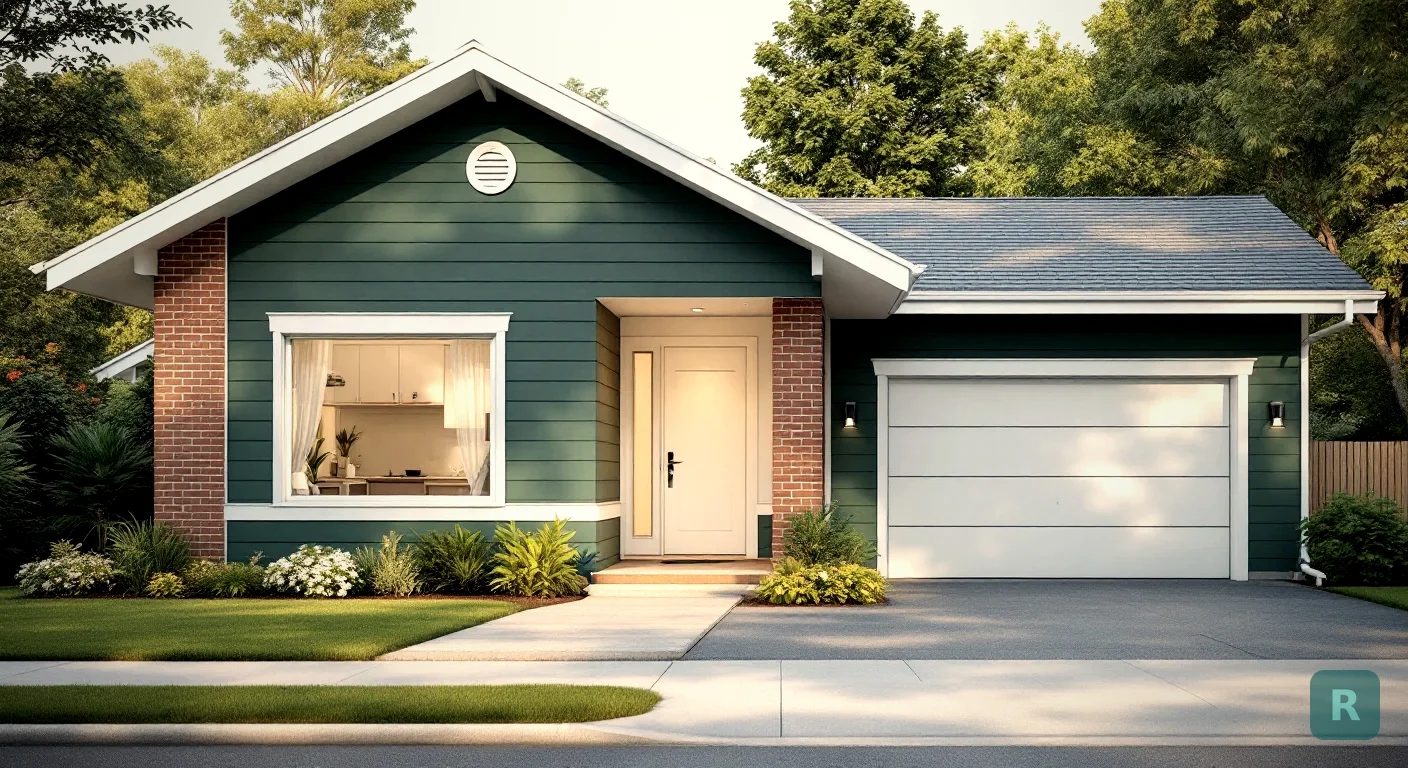
Run it through a few styles, like Modern Farmhouse, Mid-Century Modern and Contemporary, or type a custom prompt such as "dark green siding, white trim, keep the red brick."
A picture of your own house in the finished look gets you a tighter bid than "make it look less 70s."
Mid-Century Modern is worth a look, since some of these houses started out that way before the brown paint. See real examples in the gallery.
See what your house could look like from the curb. Download ReVision AI and try 3 free transformations.
If your makeover turns into a bigger project, my exterior remodel post covers the order of operations, and porch remodel covers building a real entry.
Your 70s Exterior Makeover Checklist
- Walk to the curb and list every dated tell on your house
- Remove shutters, iron and overgrown shrubs before buying anything
- Test old paint for lead and old cement siding for asbestos
- Poke the bottom edge of the siding for rot
- Decide on the brick: leave it, limewash it or paint it, in that order of caution
- Pick body, trim and door colors that work with the roof you already have
- Visualize paint, doors and trim together on a photo of your actual house
- Price the front door and garage door before you price siding
- Get at least three bids that cover the same scope, and add 15 to 20 percent for surprises
Get Design Inspiration Weekly
Fresh room makeover ideas, renovation tips, and style guides delivered to your inbox.
Design tips and inspiration only. Unsubscribe anytime.
Related Articles
Retiling a Shower: When New Tile Is Enough and When It All Comes Out
Retiling a shower? A contractor explains regrout vs retile vs full tear-out, what's hiding behind old tile, what retiling costs, and how to pick the new look.
8 min readAverage Cost of Custom Cabinets: What You Pay Per Foot, and When It's Worth It
The average cost of custom cabinets runs $500 to $1,200 per linear foot installed. A carpenter explains what custom buys you, and when semi-custom is enough.
8 min readLuxury Remodeling: What You're Really Paying For (and What's Worth It)
Luxury remodeling costs more for reasons you can't see in photos. A contractor explains where the money goes, what reads high-end, and what's wasted spend.
8 min read