Average Cost of Custom Cabinets: What You Pay Per Foot, and When It's Worth It
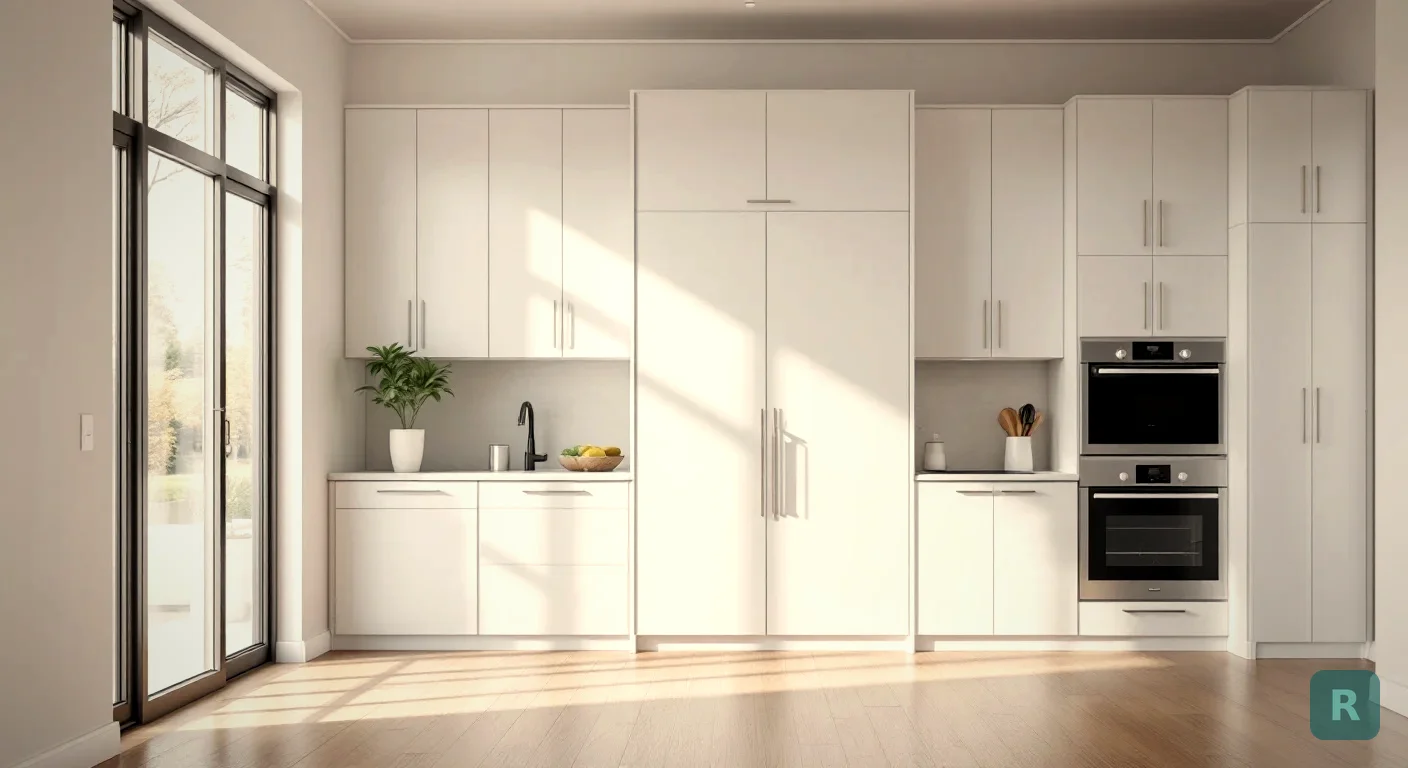
Almost every kitchen I’ve remodeled in an older house had the same problem hiding behind the old cabinets. The walls weren’t straight, the corners weren’t square, and the floor wasn’t level. Stock boxes don’t care about any of that, and that’s usually the moment a homeowner first asks what custom cabinets would cost.
Short answer: a lot more. Sometimes it’s worth every dollar. Sometimes it’s money you could have spent on counters, lighting, or a contingency fund you’re going to need.
I’m a third-generation carpenter, and cabinets are the part of a kitchen where the carpentry shows the most. Here’s what custom actually costs, what you get for it, and how to tell whether your kitchen needs it.
The Short Version
- Custom cabinets run about $500 to $1,200 per linear foot installed, against $100 to $300 for stock and $150 to $650 for semi-custom (HomeAdvisor, June 2026)
- A 10x10 kitchen has roughly 20 linear feet of cabinets, so custom lands around $10,000 to $24,000 before counters
- Custom earns its price in old houses with crooked walls, odd spaces, inset doors, and built-ins that have to match existing trim
- Semi-custom with good fillers, scribe molding, and finished end panels gets most kitchens 90% of the look
- Custom doors and finishes usually can’t be returned, so the expensive mistake is picking the wrong style, not the wrong grade
What Custom Cabinets Cost, Per Foot and Per Kitchen
Cabinets are priced by the linear foot, measured along the wall where they hang. The grade you pick moves that number more than anything else in the kitchen.
Here’s how the three grades compare on the same 10x10 kitchen. I did the math at 20 linear feet, which is what HomeLight uses for that size.
| Grade | Per Linear Foot, Installed | 10x10 Kitchen (about 20 ft) | Sizing |
|---|---|---|---|
| Stock | $100 - $300 | $2,000 - $6,000 | Fixed widths, usually 3-inch steps |
| Semi-custom | $150 - $650 | $3,000 - $13,000 | Catalog sizes with some depth, height, and finish changes |
| Custom | $500 - $1,200 | $10,000 - $24,000 | Built to your walls, to the inch |
HomeAdvisor puts the average cabinet installation, across all grades, at $6,189. A large kitchen with high-end custom work can pass $30,000 on cabinets alone. One thing to ask on any quote: does the per-foot number cover uppers and lowers together, or one row? Shops don’t all count it the same way.
What “Custom” Actually Means
The word gets thrown around loosely. I’ve seen semi-custom lines sold as “custom” because the buyer got to pick a paint color. Here’s the real difference between the three grades.
Stock cabinets come in set sizes and ship fast. When a run doesn’t add up to the wall length, the installer closes the gap with filler strips. A couple of fillers is normal. Six of them on one wall starts to look like a kitchen that was made to fit by force.
Semi-custom cabinets start from a catalog but let you change depth, height, and finish. You get more door styles and more ways to make the layout work. This is where most of the middle-class kitchens I build land, because it’s the best value per dollar for a regular family.
Custom cabinets are built for your kitchen and nobody else’s. A local shop measures the room, draws every box, and builds it to fit. That means a 31-and-a-half-inch opening gets a 31-and-a-half-inch cabinet, not a 30 with a filler.
Why Custom Costs Twice as Much
HomeAdvisor says custom adds 50% to 100% over stock or semi-custom on the same kitchen. That surprises people until they think about where the hours go. A factory runs the same box thousands of times; a cabinet shop builds yours once.
- Design and drawing time. Somebody has to measure, draw, and get your sign-off on every box before any wood gets cut.
- One-off shop time. No production line, so every cut, joint, and drawer is set up for your job alone.
- Finishing. Custom paint and stain work takes days of spraying, sanding, and curing in the shop.
- Better materials, usually. Plywood boxes, solid wood face frames, and better drawer hardware are common at this level.
- Install time. Custom pieces get scribed to the wall and fitted on site, and that’s skilled carpentry billed by the hour.
None of that is markup for the sake of markup. It’s labor, and skilled labor in the trades costs what it costs because there aren’t enough people who can do it.
When Custom Is Worth the Money
I don’t push custom on every client. If this were my mom’s kitchen, I’d only spend the money where the room actually needs it. Here’s where it pays off.
Old houses that aren’t square. This is the big one. In older Pacific Northwest homes I’ve opened up walls that bow an inch over ten feet and floors that drop toward one corner. Custom boxes and scribed panels follow those lines. Stock boxes fight them, and you see the gaps forever.
Odd spaces. Sloped ceilings, a chimney chase, a window that sits off center, a 9-foot ceiling you want to run cabinets all the way up to. Custom fills the space instead of leaving dead air above or beside the boxes.
Inset doors. Doors that sit flush inside the face frame need tight, even gaps all the way around. That kind of tolerance is mostly a custom shop thing, and it’s one of the details that reads as high end (more on that in luxury remodeling).
Matching what’s already there. If the house has original trim, a built-in hutch, or a style you want to carry from the dining room into the kitchen, a shop can match profiles that no catalog sells.
Per-foot pricing covers the cabinets. It usually doesn't cover tearing out the old ones ($350 to $800 per HomeAdvisor), drywall patching after demo ($300 to $900), or a plumber and electrician if the sink or outlets move. Countertops are their own line entirely. Ask every contractor to list these separately so you can compare bids apples to apples.
When Semi-Custom Is Enough
A rectangular kitchen with reasonably straight walls doesn’t need custom. Most newer houses fall in this group. Neither does a kitchen you plan to sell within a couple of years, or a rental.
What makes semi-custom look custom is the install, not the box. Scribe molding where the cabinet meets a wavy wall. Finished end panels instead of the raw side of a box. Crown that runs clean to the ceiling. A careful installer with good semi-custom cabinets beats a rushed installer with custom ones every time.
If your boxes are still solid and you just hate the look, you might not need new cabinets at all. Cabinet refacing puts new doors and veneer on the existing boxes, a cabinet color change is cheaper still, and a kitchen cupboard makeover walks through the low-cost options.
Here’s a full budget for that same 10x10 kitchen with custom cabinets, using HomeAdvisor’s numbers for each line:
Then add 15% to 20% on top for surprises. Pull out cabinets in an old house and you will find something behind them, whether it’s rot under the sink or wiring that was never up to code.
Lead Time Is Part of the Price
Custom cabinets aren’t sitting on a shelf. Plan on 4 to 8 weeks from order to delivery, and some shops run longer when they’re busy. The order can’t go in until the design is signed off, so the clock starts after your decisions, not after your deposit.
This is where HGTV sets people up for disappointment. Those shows skip the weeks of waiting on cabinets. In real life, I don’t start demo until the cabinets have a delivery date, because nobody wants to live without a kitchen for two extra months while a shop catches up.
And once the order is in, changes get expensive. A different door style or paint color after the shop starts building can mean paying for doors twice.
The Expensive Mistake Isn’t the Grade
Here’s what I’ve seen cost homeowners the most money on custom cabinets. It isn’t paying too much per foot. It’s spending $15,000 on a door style and color they couldn’t picture until it was hanging in their kitchen.
For years my workaround was having clients pull Pinterest photos and showing them pictures of my past jobs. That helps, but it doesn’t show them their kitchen, with their window, their light, and their floor. A white shaker that looks crisp on someone else’s kitchen in a magazine can look flat in a north-facing PNW kitchen in February.
That’s the gap ReVision AI was built to fill. Snap a photo of your kitchen, try it in different design styles, and see how a painted shaker, a natural wood slab door, or a two-tone setup actually looks in your room. Look through the before and after gallery to get a feel for it. Try it free with ReVision AI and walk into the cabinet shop knowing what you want.
Wall measurements, photos of every wall, ceiling height, and two or three renders of your own kitchen in styles you like. The more decided you are walking in, the fewer paid design hours you burn and the fewer change orders you see later.
How Cabinets Fit the Whole Kitchen Budget
Cabinets are usually the biggest single line in a kitchen remodel, so the grade you pick sets the tone for everything else. Go custom on cabinets and you may need to go simpler on counters or appliances to stay on budget. Good, fast, or cheap: you get to pick two.
For the full picture, average kitchen remodel cost breaks down where the rest of the money goes. And when the bids come in, kitchen renovation estimate shows how to tell whether three quotes are really pricing the same cabinets.
Your Custom Cabinet Game Plan
- Check your walls first. Hold a long level against them and look for gaps. Crooked walls and odd spaces are the real case for custom.
- Price all three grades. Ask for stock, semi-custom, and custom numbers on the same layout so you see the actual spread for your kitchen.
- Get per-foot pricing in writing. Confirm whether it covers uppers and lowers, and whether install, removal, and patching are included.
- Lock your style before you order. Try your kitchen in a few styles with ReVision AI so the door and color decision is made before the shop builds anything.
- Order before demo. Get a delivery date in writing, then schedule tear-out around it.
- Hold 15% to 20% back. Something will turn up behind the old cabinets. Plan for it.
Get Design Inspiration Weekly
Fresh room makeover ideas, renovation tips, and style guides delivered to your inbox.
Design tips and inspiration only. Unsubscribe anytime.
Related Articles
Retiling a Shower: When New Tile Is Enough and When It All Comes Out
Retiling a shower? A contractor explains regrout vs retile vs full tear-out, what's hiding behind old tile, what retiling costs, and how to pick the new look.
8 min readLuxury Remodeling: What You're Really Paying For (and What's Worth It)
Luxury remodeling costs more for reasons you can't see in photos. A contractor explains where the money goes, what reads high-end, and what's wasted spend.
8 min readKitchen Addition: What It Costs and What Changes When You Build Out
Kitchen addition costs run $300 to $750+ per square foot. A contractor explains bump-outs vs full additions, the wall that opens, and costs bids leave out.
8 min read