Average Kitchen Remodel Cost: Why Your Number Won't Match the Internet's
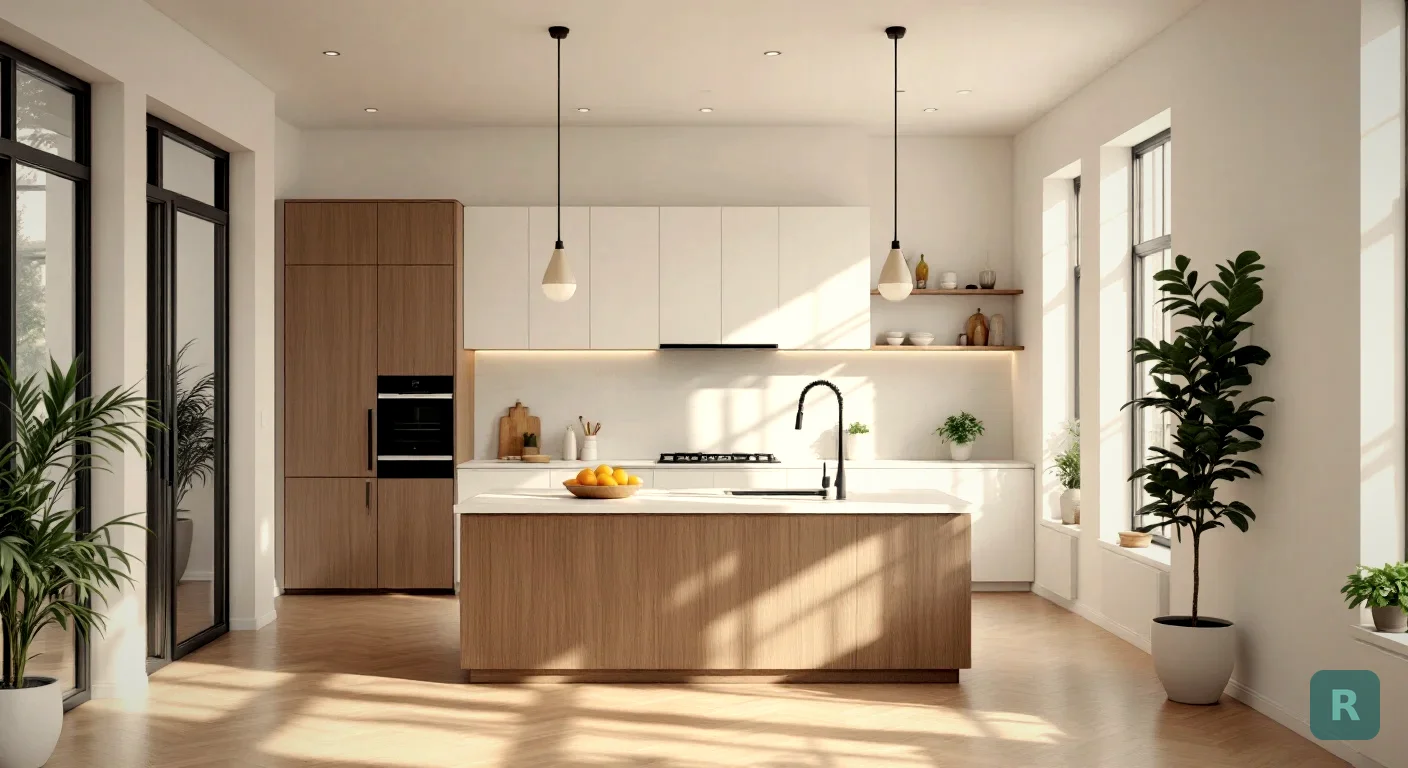
- The 2025 Cost vs. Value report from Zonda puts a minor kitchen remodel at $28,458 nationally. That job keeps the old cabinet boxes.
- In my market in the Pacific Northwest, a mid-range kitchen with new cabinets usually starts around $45,000
- Moving the sink, the range, or a wall is what pushes a kitchen past that, because it brings in plumbing, gas, venting, and permits
- Cabinets and labor are the two biggest lines on almost every kitchen I bid
- Pick your scope before you pick a number, and see the design on your own kitchen before you collect bids
Here’s the most common mistake I see before a kitchen remodel even starts. Somebody googles the average kitchen remodel cost, finds one number, and builds their whole plan around it.
Then the first bid comes in at double. The bid usually isn’t the problem. The average is. It blends a $12,000 paint-and-counters job with a $120,000 gut-and-move-everything job, and your kitchen is neither of those.
I’ve built kitchens for over 20 years, and I’ve watched that gap between the Google number and the real one cause more stress than any stuck delivery. So let’s skip the single number and look at what kind of kitchen you’re actually planning.
The Number Everyone Quotes, and What It Actually Covers
That’s a real, well-sourced number. It also describes a specific job. A minor kitchen remodel in that report keeps the existing cabinet boxes and puts new fronts on them, along with new counters, a sink and faucet, appliances, and flooring.
Nothing moves. No walls come out. The plumbing stays right where it is.
The same report says that job recoups about 113 percent of its cost at resale, which is why it shows up in every “best return” list. If you’re planning to sell soon, that’s worth knowing. If you’re planning to live there for fifteen years, the question is different.
Three Kitchens Hide Inside One Average
When a homeowner asks me what a kitchen costs, I answer with a question. Which of these three are we talking about?
| Scope | What Changes | What Stays | Rough Range |
|---|---|---|---|
| Refresh | Paint or reface cabinets, counters, backsplash, hardware, maybe appliances | Cabinet boxes, layout, plumbing | $10,000 - $35,000 |
| Full remodel, same layout | New cabinets, counters, flooring, lighting, appliances | Where the sink, range, and walls sit | $45,000 - $80,000 in my market |
| Layout change | Everything above, plus moved plumbing, gas, venting, or walls | Not much | $80,000 and up |
Those ranges come from the Pacific Northwest, where labor isn’t cheap. Your region will shift them, but the gaps between the three tiers hold almost everywhere. A layout change costs more than a same-layout remodel in any market, because it pulls in more trades.
If your cabinets are solid and you just hate how they look, start with the refresh tier. My posts on cabinet refacing cost and kitchen cupboard makeovers cover how far that can go without a tearout.
Where the Money Goes on a Mid-Range Kitchen
This is the tier most of my clients land in. They’re regular families who want quality without going crazy, and they want new cabinets but they’re keeping the layout.
Two lines do most of the damage: cabinets and the labor to install them right. Counters get all the attention in the showroom, but they’re usually the third or fourth biggest line on a kitchen I bid.
Want to dig into a single line? Here’s my breakdown of kitchen countertop replacement cost, and the best kitchen floor post covers what holds up under real use. If you’re watching the cabinet line hard, IKEA kitchen renovation cost shows what changes with flat-pack boxes, and what doesn’t.
Why labor costs what it costs
Most homeowners have no clue why a contractor charges $100 an hour or more. They make $30 an hour, and the math feels insulting.
That hourly rate isn’t profit. It carries insurance, the truck, the tools, the license, the warranty, the payroll, and the liability if something goes wrong three years from now. It’s what keeps a real business alive long enough to come back and fix a sticky drawer.
What Pushes a Kitchen Past Average
The jump from tier two to tier three almost always comes from one decision. You move something.
- Moving the sink. The drain has to slope and vent correctly to its new spot, which can mean opening the floor or a wall
- Moving the range. Gas lines, a dedicated circuit, and a hood vent that has to find its way outside
- Adding an island with a sink or cooktop. Now plumbing and power have to come up through the floor
- Taking out a wall. If it’s bearing, you’re paying for a beam, an engineer, and a longer permit review
- Upgrading the electrical panel. Modern kitchens need more dedicated circuits than a lot of older houses were built with
Here in the Pacific Northwest, there’s another one that doesn’t show up in any average. Moisture and rot behind the sink wall. I’ve opened up kitchens expecting a simple cabinet swap and found a subfloor that was soft from years of slow drips.
Add 15 to 20 percent contingency on top of your bid, every time. Rot, old wiring, and plumbing that was never up to code only show up after demo.
A contractor who builds that cushion in isn't padding the price. They've just been burned before. I have.
If your house was built before modern code, my guide to old house renovation covers what tends to show up once the walls open.
Why the Cheapest Bid Rarely Stays Cheapest
Some contractors bid low on purpose. They leave out the backsplash, the permit, the drywall patch, or the appliance hookups, then write change orders once your kitchen is already torn apart.
By then you’re stuck. You can’t switch contractors halfway through a kitchen with no sink. The cheap bid ends up costing more than the honest one would have.
When you compare bids, lay them side by side and check that every one covers the same scope. If one bid has no line for disposal or permits and the others do, that’s not a better deal. That’s a change order waiting to happen.
Time Is Part of the Cost, Too
HGTV squeezes a kitchen into 30 minutes. Real kitchens don’t work that way.
Design and material selection come first, and that alone takes weeks if you’re doing it right. Custom and semi-custom cabinets can take 4 to 8 weeks to arrive, so the order has to go in early or the whole job sits. Then you’re living without a kitchen for weeks, eating out or cooking on a hot plate in the dining room, and that’s the part that hits families hardest.
Good, fast, or cheap. You can pick two. A kitchen that’s done well and done fast won’t come in under average.
The Design Decisions Are Where Budgets Drift
Here’s something the cost guides don’t talk about. A lot of budget drift doesn’t start with rot. It starts with indecision.
A homeowner picks white shaker cabinets, then sees them installed and wonders about sage green. The tile gets swapped after it’s ordered. Every “actually, can we change that?” adds time and money, and cabinets usually carry restocking fees when they go back.
That’s the design gap I’ve dealt with my whole career. Most contractors are builders, not designers, and most homeowners can’t picture a finished kitchen from a door sample. My old workaround was sending people to Pinterest, which only shows them somebody else’s kitchen.
It’s why I built ReVision AI. Take a photo of your kitchen the way it looks today, pick a style, and see your own room with new cabinets, counters, and color before anyone orders anything.
Browse every option on the styles page or flip through the before and after gallery. For more on the visualization side, see AI kitchen remodel, and if you’re wondering what apps like this charge, I covered that in remodel AI cost. Planning more than one room? What it costs to renovate a house puts the kitchen in context with everything else.
How to Get Your Real Number
- Decide your tier first. Refresh, full remodel on the same layout, or layout change. That one choice sets your budget more than any finish you pick later.
- Know your real budget, not the one you hope for. Then set aside 15 to 20 percent for surprises.
- Open the sink base and look. Soft subfloor or water stains belong in your budget now, not your schedule later.
- See the design on your own kitchen before you call contractors, so you walk in knowing what you want.
- Get at least three bids with the same scope, and ask each contractor what is NOT included and how they handle change orders.
- Check their work, not their pitch. Ask for references, look at past kitchens, and verify license and insurance.
- Order cabinets early. Lead times of 4 to 8 weeks decide your start date more than the contractor’s calendar does.
Want to settle the design before you spend a dime on bids? Try it free with ReVision AI and run three transformations on your own kitchen.
Get Design Inspiration Weekly
Fresh room makeover ideas, renovation tips, and style guides delivered to your inbox.
Design tips and inspiration only. Unsubscribe anytime.
Related Articles
Retiling a Shower: When New Tile Is Enough and When It All Comes Out
Retiling a shower? A contractor explains regrout vs retile vs full tear-out, what's hiding behind old tile, what retiling costs, and how to pick the new look.
8 min readAverage Cost of Custom Cabinets: What You Pay Per Foot, and When It's Worth It
The average cost of custom cabinets runs $500 to $1,200 per linear foot installed. A carpenter explains what custom buys you, and when semi-custom is enough.
8 min readLuxury Remodeling: What You're Really Paying For (and What's Worth It)
Luxury remodeling costs more for reasons you can't see in photos. A contractor explains where the money goes, what reads high-end, and what's wasted spend.
8 min read