Kitchen Countertop Replacement Cost: Real Numbers From 20 Years of Installs
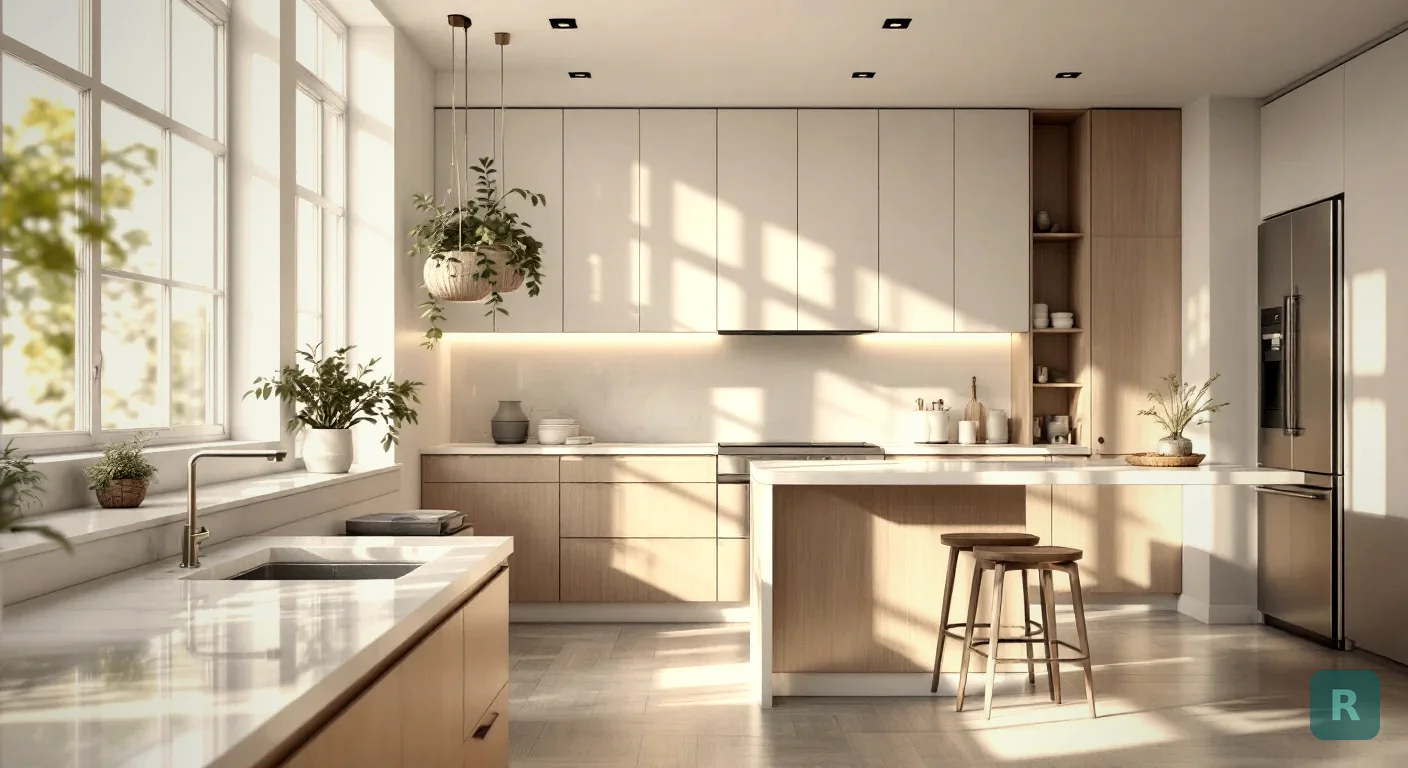
A woman once told me she had budgeted $2,400 for new kitchen counters. She had measured her own kitchen, found a quartz price online at $60 a square foot, multiplied, and felt good about it.
Her real number came in at $6,100. She was not wrong about the $60. She was wrong about everything the $60 does not include.
That gap shows up on almost every counter job I quote, and it is not because anybody is being sneaky. It is because a countertop is sold by the square foot and installed by the piece, and those two things price completely differently.
The Short Version
- The per-square-foot price you see advertised is material only, and material is usually about half the finished job
- Sink cutouts, edge profile, seams, and tearout are separate line items that add $600 to $2,000 on a typical kitchen
- Quartz and granite land in roughly the same range now, so pick on how you cook, not on price
- Your quote can legitimately change at template, and a contractor who warns you about that is being honest, not squishy
- Deciding the color before the slab is cut is the cheapest decision in the whole project
What a Kitchen Countertop Replacement Actually Costs
A standard kitchen is somewhere around 30 to 45 square feet of counter. Not the fancy one with the 10 foot island. The normal one, with an L of counter, a sink run, and maybe a small peninsula.
For that kitchen, in most of the country, replacement lands between $3,000 and $7,500 installed. Laminate can come in under that. Marble and exotic granite go well over it.
Here is the part people miss. Material is one line. Labor, fabrication, and demo are the others, and together they usually equal or beat the material.
That is why $60 a square foot times 38 does not get you a kitchen. It gets you a slab sitting on a rack in a warehouse.
Material by Material, With the Honest Tradeoffs
I have installed all of these. Some of them I have also gone back and repaired, which teaches you more than the install does.
| Material | Installed per sq ft | Holds up to | Watch out for |
|---|---|---|---|
| Laminate | $25 - $50 | Daily wear, budget kitchens | Heat, water at seams, cannot be repaired |
| Butcher block | $40 - $80 | Warmth, cutting, refinishing | Needs oiling, hates standing water |
| Granite | $60 - $110 | Heat, knives, decades of use | Needs sealing, every slab differs |
| Quartz | $65 - $120 | Stains, no sealing ever | Hot pans can scorch it, seams show |
| Solid surface | $55 - $95 | No visible seams, repairable | Scratches, dated in resale eyes |
| Marble | $90 - $200 | Pastry, looking incredible | Etches from lemon, wine, vinegar |
Quartz and granite have basically converged on price. Ten years ago granite was the value pick. Now they overlap so much that the decision should be about how you actually live.
Cook with cast iron and pull things straight off the burner? Granite. Have young kids, red drinks, and zero interest in resealing anything? Quartz. Bake a lot and want a cold surface for dough, and you accept that it will get a patina? Marble, and make peace with it now.
The sink is a $180 item. The cutout, polish, and undermount reinforcement are the labor you are actually paying for, and that does not go away. If a bid is cheaper because of a free sink, look at the fabrication line instead. That is where the real difference lives.
Why Your Quote Changes at Template
This is the part that makes homeowners nervous, so let me explain what is really happening.
The first number you get is from measurements on paper. The real number comes after somebody templates your kitchen, usually with a laser, after the old tops are off.
Three things routinely change at that point:
- Your cabinets are not level. Old kitchens settle. If the run is out by a half inch, the fabricator has to shim and sometimes scribe the backsplash, and that is added labor.
- The layout needs a seam you did not expect. Slabs come in fixed sizes. A long L run may need a seam, and where that seam falls is a design decision with a cost attached.
- The old tops were hiding something. Rot under the sink is the big one. In the Pacific Northwest, where I work, I find soft plywood under kitchen sinks more often than not.
"What is your process if the template comes back different from the estimate?" A good fabricator has a clear answer and a written change process. A vague answer is your warning.
I would rather tell somebody up front that the number can move than hand them a low bid and a surprise. That is the same reason I built an estimating tool in the first place. Guessing is what gets both sides burned.
The Cost Drivers Nobody Puts in the Ad
Two kitchens the same square footage can price $2,000 apart. Here is what does it.
Edge profile. A standard eased or bullnose edge is included. A mitered waterfall edge, an ogee, or a laminated double thickness edge can add $20 to $45 per linear foot. On 22 linear feet that is real money.
Cutout count. Every hole costs. Sink, cooktop, faucet, soap dispenser, air switch, pot filler. I have seen six cutouts on a kitchen that only needed three.
Backsplash decisions. A 4 inch stone backsplash out of the same slab is cheap because it uses offcuts. A full height slab backsplash behind the range is beautiful and can add $800 to $1,500.
Access. Second floor condo with no elevator, tight stair turn, or a 10 foot island piece that needs six guys and a suction rig. All of that is labor.
Seam placement. Fewer seams means bigger slabs means more waste, and you pay for the waste either way. On patterned quartz, matching the veining across a seam takes extra slab.
Where You Can Actually Save Money
There are honest savings here, and there are fake ones. These are the honest ones.
- Keep the existing sink location so you are not moving plumbing
- Pick a stock color the fabricator already carries instead of a special order slab
- Take a standard edge profile and spend the difference on a better material
- Use slab remnants for a small bathroom vanity in the same order
- Do the tearout yourself if the old tops are laminate and you are careful with the cabinets
- Keep the backsplash to 4 inches and tile the rest
The fake savings are the ones that show up later. Skipping the undermount reinforcement. Taking a thinner slab. Letting somebody install over cabinets that should have been shimmed. Every one of those costs more to fix than it saved.
Ask the fabricator what remnants they have in stock. A bathroom vanity top or a small bar is often a fraction of the price out of a leftover piece, and it lets you use a material you could not afford across a whole kitchen.
See the Slab in Your Kitchen Before You Buy It
Here is the single most expensive mistake I watch people make, and it has nothing to do with the price of stone.
They pick a color from a 4 inch sample chip held up in a showroom under different lighting than their house. Then they see 38 square feet of it against their own cabinets and it reads completely different.
A sample chip cannot show you scale. Big veining that looks dramatic on a chip can look busy across a whole island. A subtle speckle that looks boring on a chip can look flat and cheap once it fills a room.
For years my workaround was hauling clients to my past jobs so they could stand in a finished kitchen. That works, but it is somebody else’s kitchen, with somebody else’s cabinets and light.
That is exactly why I built ReVision AI. Take a photo of your kitchen as it is right now, and see it with different counter materials and different styles before anybody cuts anything. The before and after gallery shows the kind of change I mean.
That second version is the same kitchen. Same footprint, same boxes, same window. The counters and paint did the whole thing, and you can see it before you spend a dollar.
How Counters Fit the Rest of the Kitchen Budget
Counters rarely happen alone. If you are already pulling the tops off, the cabinets, backsplash, and sink are all right there.
A counter-only swap is the cheapest real upgrade in a kitchen. It changes the whole room for a fraction of a full remodel. If your cabinet boxes are solid, counters plus paint plus hardware is the best dollar-for-impact move I know.
If the boxes are shot, that is a different conversation. Our guide to what a kitchen redesign involves and the breakdown of cabinet refacing cost both cover that side. And if you want the number on a different surface entirely, we walk through bathtub replacement cost the same way.
Your Next Five Steps
- Measure your actual counter square footage. Length times depth, in feet, for every run. Standard depth is 25 inches, so use 2.1 feet.
- Pick two materials, not one. A first choice and a backup at a lower price point, so you have room to move when the quote comes in.
- Photograph your kitchen from the doorway in daylight, with the counters clear, and visualize both materials in your own space before you go to a showroom.
- Get three bids that itemize material, fabrication, cutouts, tearout, and install as separate lines. If a bid is one number, ask for the breakdown.
- Set aside 15% contingency for what the template finds. If nothing turns up, you just bought yourself a better backsplash.
See what your kitchen would look like with new counters before you commit to a slab. Download ReVision AI and try three free transformations on a photo of your own kitchen.
Get Design Inspiration Weekly
Fresh room makeover ideas, renovation tips, and style guides delivered to your inbox.
Design tips and inspiration only. Unsubscribe anytime.
Related Articles
Sunroom Remodel: How to Turn a Three-Season Room Into Space You Actually Use
A contractor's guide to a sunroom remodel: three-season vs four-season, glass and insulation costs, heating options, rot risks, and how to see the finished room first.
8 min readBathroom Addition Cost: What Adding a Bathroom Really Runs
A contractor's breakdown of bathroom addition cost: the three ways to add a bath, why the drain path sets the price, and the hidden costs that show up after demo.
8 min readPantry Remodel: What It Costs and What Actually Works
A contractor's guide to a pantry remodel: the three types and what each costs, shelf depths that actually hold food, lighting nobody budgets for, and how to see it first.
8 min read