Cabinet Color Change: What It Costs and How to See It First
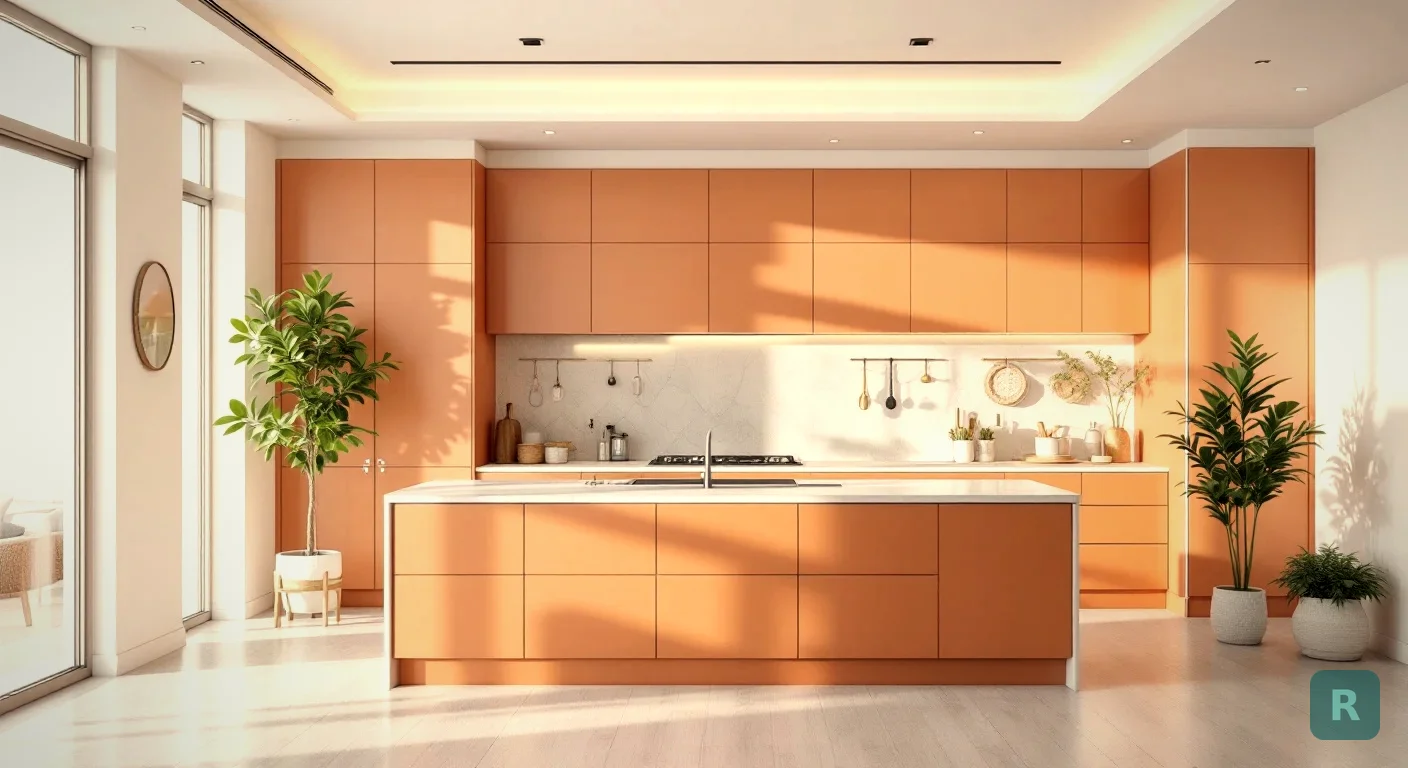
The homeowner wanted a whole new kitchen. Forty-five grand, minimum, in this market. Then she said the layout was fine, the boxes were solid maple, and what she actually hated was the orange-brown 1998 stain.
That is not a kitchen remodel. That is a color problem.
I have been swinging a hammer for twenty-plus years, third generation, and I would guess a solid third of the kitchens people ask me to gut do not need gutting. They need a cabinet color change. Same boxes, same layout, same footprint, radically different room for a fraction of the money.
Key Takeaways
Painting existing cabinets runs roughly $30 to $60 per door and drawer front if you hire it out, far below replacement.
Solid wood doors can be refinished or painted. Thermofoil and laminate are a different animal and need different prep.
Color choice, not technique, is where most people go wrong. Undertones read completely differently under your kitchen's actual lighting.
Preview the color on a photo of your real kitchen before you buy a single can.
What a Cabinet Color Change Actually Costs
Here is what I quote and what I see other shops quote in the Pacific Northwest. Your market will shift these numbers, but the ratios hold just about everywhere.
That gap is the whole point. A sprayed color change gets you most of the visual payoff of new cabinets for something like a fifth of the price.
If the boxes are sound and the layout works, spending forty-five grand to fix a color is not a remodel. It is an expensive way to avoid picking a paint.
Paint, Refinish, or Reface
These three get used interchangeably and they are not the same job. Picking wrong is how people end up unhappy.
- Paint. Opaque color over the existing doors and frames. Hides grain. Works on wood, MDF, and properly prepped laminate.
- Refinish. Strip and re-stain. Keeps the wood grain visible. Only an option on solid wood or real veneer.
- Reface. New doors and drawer fronts, new veneer on the boxes. Not really a color change, it is a partial replacement.
Want the grain? Refinish. Want a clean modern color? Paint. Want a different door style entirely, shaker instead of raised panel? Now you are refacing, and you should read what refacing actually costs before you commit.
Thermofoil is a vinyl skin heat-pressed over MDF. It peels rather than chips, and paint will not stick to it without a bonding primer and scuffing. If a corner near your oven is already lifting, painting will not fix that door. Replace it.
The Part That Goes Wrong: Picking the Color
Prep and spray technique are learnable. I can teach a new guy to lay down a clean finish in a week. What I cannot teach in a week is color judgment, and that is where the money gets wasted.
Here is what happens. Someone grabs a chip at the paint counter under fluorescent light. It looks like a warm greige. They buy five gallons. It goes up in a kitchen with north-facing windows and warm LED cans, and now it is lavender.
Undertones are the whole game. Every off-white and every gray has a bias hiding in it, and your kitchen’s light pulls that bias forward.
Undertones by Light Direction
| Your Kitchen Light | What It Does | Lean Toward |
|---|---|---|
| North-facing windows | Cools everything, greys out warm tones | Warm whites, creamy off-whites |
| South-facing windows | Floods warm light all afternoon | Cooler whites, true greys |
| Warm LED / 2700K cans | Pushes yellow into everything | Neutral or slightly cool |
| Cool LED / 4000K | Pushes blue, can read clinical | Warmer, softer tones |
And remember the cabinets are not alone in there. Your counters, your backsplash, and your floor all have undertones too, and they are already installed. The cabinet color has to live with them.
Why I Started Showing People Renders Instead of Chips
For years my process was Pinterest. I would tell a homeowner to go build a board, bring me pictures, and then I would dig up photos of my own past jobs to bridge the gap. It sort of worked. It was also clunky, and it never showed them their kitchen.
That is the design gap in this trade. Most remodeling contractors are builders, not designers. Hiring an actual designer to pick a cabinet color is overhead that does not pencil out on a $4,000 paint job.
So the homeowner guesses. Then they live with the guess for fifteen years.
That transformation is paint and hardware. Nothing structural moved. The reason people do not do it more often is simply that they cannot picture it, and nobody wants to gamble four grand on a color they have only seen as a one-inch square.
Preview the Color Before You Buy the Paint
This is exactly the problem I built ReVision AI to solve. Take a photo of your kitchen as it sits right now, orange oak and all, pick a style or describe the color you are considering, and see your own cabinets in it.
Try three or four colors. It costs you nothing to be wrong on a screen. Being wrong after the sprayer comes out costs you the whole job over again.
Stand in the doorway and get the full run of cabinets, counters, and floor in one frame. Turn on the lights you actually use at night, and shoot a second one in daylight. The color reads differently in each, and you want to like it in both.
Browse the style gallery if you are not sure what you are after yet. Sometimes people do not know they want a two-tone kitchen until they see one on their own walls.
What This Does Not Fix
I would rather be straight with you than sell you on a color change that will not hold up.
- Sagging or delaminating boxes. Paint is not structure. Bad boxes need replacing.
- A layout that does not work. If the fridge blocks a drawer, a new color makes it a prettier annoyance.
- Worn-out hinges and slides. Cheap to replace while the doors are already off, so do it then.
- Doors you genuinely dislike the style of. Color will not turn a raised panel into a shaker.
Good, fast, or cheap. Pick two. A color change is the cheap-and-good option, which means it is not fast if you want it done right. Proper prep is most of the labor, and skipping it is why so many DIY cabinet jobs are chipping at the corners within a year.
Your Move
Open every door. Look for sagging shelves, water damage under the sink, and peeling at the corners. Sound boxes mean you are cleared to proceed.
Solid wood, MDF, or thermofoil. Check an inside edge. This decides your prep and your primer.
Once in daylight, once under your evening lights, both from the doorway with counters and floor in frame.
Run your photo through ReVision AI and live with each option for a day before deciding.
Buy a quart. Paint an actual door. Set it in the kitchen for two days and look at it morning and night.
Make sure both quotes include degreasing, sanding, bonding primer, and a sprayed finish. If a bid is missing prep, that is why it is cheaper.
The kitchen I mentioned at the top? She painted. Warm white on top, deep green below, new brass pulls, about $5,200 all in with a pro sprayer. She kept the other forty grand.
See what your cabinets could look like before you commit to a color. Try it free with ReVision AI and run your kitchen through a few options tonight.
Get Design Inspiration Weekly
Fresh room makeover ideas, renovation tips, and style guides delivered to your inbox.
Design tips and inspiration only. Unsubscribe anytime.
Related Articles
Bathroom Designers: Who to Hire, What They Charge, and How to Prep
Bathroom designers come in four kinds and charge four ways. A contractor explains which one fits your remodel and how to show up ready to the first meeting.
8 min readApartment AI: How to Redesign a Rental You Are Not Allowed to Renovate
Apartment AI tools let renters see a redesigned space before spending a dollar. A contractor explains what actually changes a rental and what just wastes money.
8 min readAI Restaurant Design: Testing a Dining Room Before You Gut It
AI restaurant design turns a photo of your dining room into a finished concept in seconds. A remodeler's honest take on what it solves and what it hides.
8 min read