Bathroom Designers: Who to Hire, What They Charge, and How to Prep
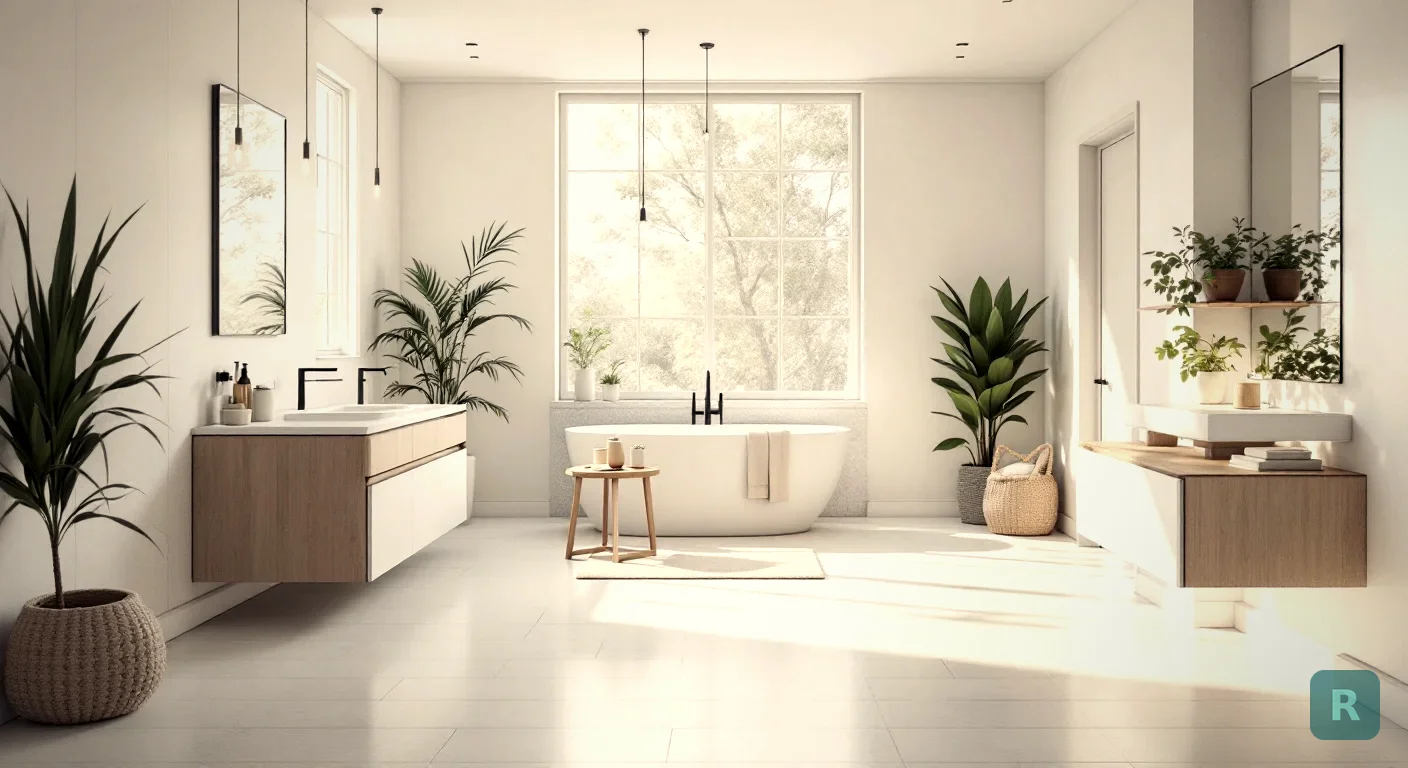
Most homeowners search for bathroom designers after the third contractor walks through and asks, “So what do you want in here?” That question is where a lot of bathroom remodels stall.
I’ve built a lot of bathrooms over 20+ years, and I’ll be honest about something. Most remodeling contractors are builders, not designers. We can tell you what will fit, what will leak and what code allows. Picking the tile, the vanity and the layout that makes a cramped bath feel right is a different skill.
So who do you hire for that part? It depends on the job, the budget, and how much you already know about what you want.
Key Takeaways
- “Bathroom designer” covers four different people: independent designers, certified kitchen and bath designers, showroom designers, and design-build firms
- They charge four different ways (hourly, flat fee, percentage, or free with a purchase), and the free one isn’t really free
- You need a designer most when you’re moving plumbing, changing the layout, or going curbless
- The more you bring to the first meeting, the fewer paid hours you burn figuring out your own taste
- Seeing your actual room in a few styles before that meeting is the fastest way to cut those hours
The Four Kinds of Bathroom Designers
Search “bathroom designers near me” and you’ll get a mix of people who do very different jobs. They all use the same word. Knowing which one you’re talking to tells you what you’ll actually get.
| Type | Who They Are | Best For | Watch Out For |
|---|---|---|---|
| Independent interior designer | Runs their own practice, designs whole rooms or whole houses | Bathrooms that need to tie into the rest of the house's look | Some focus on finishes and furniture, not plumbing and layout |
| Certified kitchen and bath designer | Holds an NKBA credential (AKBD, CKBD or CMKBD) | Layout changes, tight spaces, accessibility | Fewer of them, so expect a wait |
| Showroom or cabinet shop designer | Works for a store that sells vanities, tile or fixtures | Straight swaps with new cabinetry | Designs around what the store sells |
| Design-build firm | Contractor with a designer on staff or on call | One point of contact from drawings to final inspection | Hard to shop the build part to another contractor later |
The certified kitchen and bath designer is the one most people don’t know exists. The National Kitchen and Bath Association runs a credential ladder just for these two rooms.
That doesn’t mean an uncertified designer is bad. Some of the best bathrooms I’ve built were drawn by people with no letters after their name. But a CKBD has been tested on the stuff that bites you in a bathroom: clearances, plumbing layout and how people actually move in a small room.
How Bathroom Designers Charge
There’s no single rate. Ask how they bill before you ask anything else, because it changes how you should use them.
- Hourly. You pay for the time spent. Good if you only need a layout and a few selections. Bad if you can’t make decisions, since every “let me think about it” is on the clock.
- Flat fee. One price for a defined scope, usually drawings plus selections plus a set number of revisions. Get the revision count in writing.
- Percentage of the project. Common with full-service designers who manage selections through the build. Your design cost grows with your budget.
- Free with purchase. Showrooms and cabinet shops often fold design time into the product order. Nothing wrong with that, as long as you understand the design will be built around their catalog.
A free layout from a showroom is usually only free if you buy their vanity, their tile or their fixtures. If you walk away, some will charge you for the drawings or won't release them at all. Ask before the first sketch, not after.
Whatever the structure, ask exactly what you get at the end. Dimensioned drawings? An elevation of each wall? A selections list with model numbers? A pretty rendering with no measurements on it is not something a contractor can bid from.
When You Actually Need a Designer
Not every bathroom needs one. If you’re swapping a vanity, a toilet and a tub surround in the same spots, you probably don’t. Pick finishes you like, keep the layout, and spend the money on good waterproofing.
You start needing real design help when the job gets into any of these:
- Moving the toilet, shower or vanity to a new wall
- Converting a tub to a walk-in or curbless shower
- Planning for aging in place, with grab bar blocking, a wider door and a bench
- Taking space from a closet or hallway to make the bathroom bigger
- A primary bath where you’re spending enough that a wrong call really hurts
Every one of those touches plumbing, framing or both. Moving a toilet a couple feet is not a design decision, it’s a drain line decision. A good designer knows that and checks with the contractor before falling in love with a layout.
The Measurements That Separate Good Design From Pretty Design
This is where I see the gap between a designer who’s spent time on jobsites and one who hasn’t. Code gives you the minimum. Good design gives you room to live.
| Measurement | Code Minimum (IRC) | NKBA Recommendation |
|---|---|---|
| Toilet centerline to side wall or fixture | 15 in | 18 in |
| Clear space in front of toilet | 21 in | 30 in |
| Shower interior size | 30 in x 30 in | 36 in x 36 in |
Three inches doesn’t sound like much on paper. Then you’re sitting on a toilet with your shoulder against the vanity. If a designer hands you a layout that hits every code minimum at once, that bathroom is going to feel tight, even if it passes inspection. Your local code is the final word, so the contractor should confirm these against what your jurisdiction enforces.
What to Bring to the First Meeting
Here’s how you save money with any designer. Do your homework before the clock starts. The homeowners who walk in prepared get better designs in fewer hours, every time.
Wall lengths, ceiling height, window and door locations, and where the toilet, tub and sink sit now. Take photos from every corner.
Not enough storage? No counter space? Shower too small? Fan that never clears the mirror? The problems drive the design more than the finishes do.
What you can actually spend, plus 15-20% held back for surprises. Designers design to a number. Without one, they guess.
Take a photo of the bathroom as it is and run it through a few looks. Bring the two or three you keep coming back to.
That last step is the one I wish I’d had for years. My old workaround was asking clients to build a Pinterest board and then showing them photos of bathrooms I’d already built. It helped, but it was clunky. None of those pictures were their bathroom, with their window and their awkward soffit.
Seeing your own room in a modern farmhouse look next to a Japandi one tells you more in five minutes than a week of scrolling. You can browse the looks on the styles page or see real before-and-afters in the gallery. Then the designer’s paid hours go into making the layout work, not finding out what you like.
Designers learn as much from what you hate as what you love. If you never want a glass shower door to squeegee or grout lines on the floor, say it in the first meeting.
Red Flags When Hiring a Bathroom Designer
Most designers are good people trying to do good work. A few habits still tell you to keep looking.
- No dimensions on the drawings. If a contractor can’t bid from it, you paid for a picture.
- Never asks about the plumbing. Where the drain runs, where the vent goes, and what’s under the floor decide what’s possible.
- Selections that ignore the budget. A beautiful design you can’t afford just sends you back to start, with less money.
- No time for the contractor. Designer and builder have to talk. If the designer won’t take a call from your contractor, you’ll be the one passing messages back and forth.
- Specs with long lead times and no warning. Some tile and fixtures take 4 to 8 weeks to arrive. A good designer tells you that before you fall in love with them.
That last one costs people more than they expect. A bathroom stuck waiting on a special-order valve is a bathroom you can’t use. Get selections finalized and ordered before demo day.
Designer, Contractor or Both?
If the design isn’t done and the contractor starts anyway, the homeowner pays for it. Changes in the middle of a job cost more than changes on paper, every single time. Every “actually, can we move that?” after the walls are open is a change order.
My advice is the same thing I’d tell my sister. If the layout stays put, skip the designer and spend the money on the build. If the layout moves, hire someone who knows bathrooms specifically, and get them talking to your contractor early. If you’re not sure which camp you’re in, our guide to designing a renovation without hiring a designer walks through the DIY path, and the post on AI interior designers covers what the tools can and can’t do. Going big on finishes? Read what luxury remodeling actually buys first.
Curious how a new look would land in your space before you pay anyone by the hour? Try it free with ReVision AI. You get 3 free transformations, and Pro is $4.99 a month if you want to keep going.
- Decide whether the layout stays put or moves
- Measure the room and photograph it from every corner
- List what's wrong with the bathroom today
- Set a real budget plus 15-20% for surprises
- Pick the 2 or 3 styles you keep coming back to, seen on your own room
- Ask each designer how they bill and what you get at the end
- Confirm the drawings will have dimensions a contractor can bid from
- Get the designer and contractor talking before anything is ordered
Get Design Inspiration Weekly
Fresh room makeover ideas, renovation tips, and style guides delivered to your inbox.
Design tips and inspiration only. Unsubscribe anytime.
Related Articles
Apartment AI: How to Redesign a Rental You Are Not Allowed to Renovate
Apartment AI tools let renters see a redesigned space before spending a dollar. A contractor explains what actually changes a rental and what just wastes money.
8 min readAI Restaurant Design: Testing a Dining Room Before You Gut It
AI restaurant design turns a photo of your dining room into a finished concept in seconds. A remodeler's honest take on what it solves and what it hides.
8 min readAI for Landscaping: See Your Yard Redesigned Before You Spend a Dollar
AI for landscaping turns a photo of your yard into a finished design in seconds. A contractor's take on what these tools get right and where they quietly lie.
8 min read