Sunroom Remodel: How to Turn a Three-Season Room Into Space You Actually Use
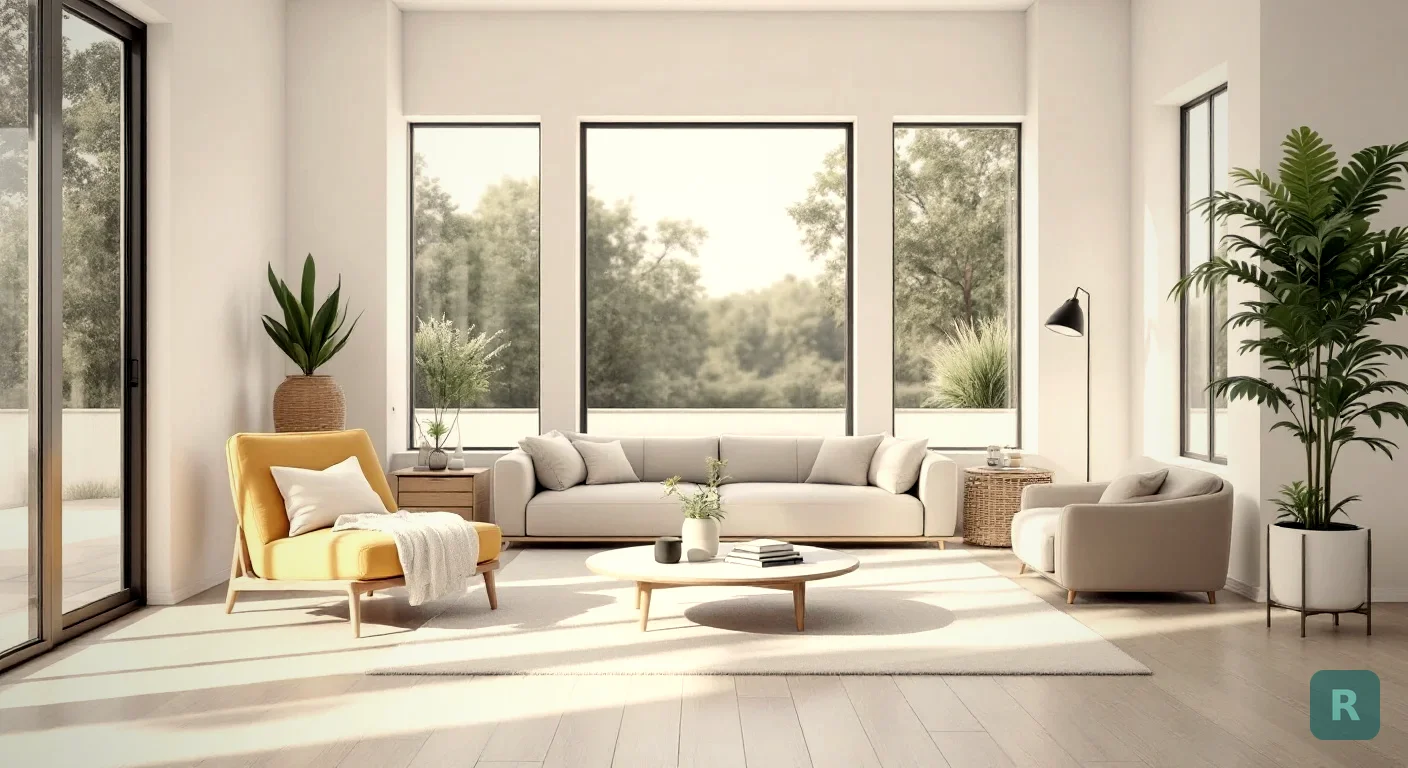
Most sunrooms I walk into are storage units with a view. Bikes, a treadmill nobody rides, a wicker set that went gray four summers ago. The room is freezing from October to April and about 95 degrees by two in the afternoon in July.
So the family uses it for six good weeks a year and pays property tax on it for all fifty-two.
That is the honest starting point for almost every sunroom remodel. The bones are already there. What is missing is the stuff that makes a room a room: insulation, a heat source, a floor that is not painted concrete, and a reason to walk in there on a Tuesday in February.
Key Takeaways
- Figure out whether you have a three-season or four-season room before you price anything. That one answer moves the budget more than any finish choice.
- Glass and insulation usually eat the biggest share of the budget, not the pretty stuff.
- You normally cannot just extend your existing furnace ducts into a sunroom. Plan on a dedicated heat source.
- Sunrooms are the number one place I find rot, because the roof tie-in and the sill are almost always the weak point.
- Design is harder here than in a bedroom, since the walls are windows. See the finished room before you buy a single thing.
First Question: Three-Season or Four-Season?
A three-season room is an enclosed porch with glass in it. Single-pane or thin double-pane windows, little or no wall insulation, no heat, and often a floor sitting right on a slab or on an uninsulated deck frame.
A four-season room is a real addition. Insulated walls and roof, insulated glass, a heat source, and a floor assembly built like the rest of the house.
Going from the first to the second is not a decorating project. It is a construction project, and in a lot of jurisdictions it is a permitted one, because you are adding conditioned square footage to the house.
| What You're Looking At | Three-Season | Four-Season |
|---|---|---|
| Glass | Single or basic double pane | Insulated, low-E, gas filled |
| Walls | Little or no insulation | Insulated to code |
| Heat and cooling | None, or a space heater | Dedicated source, usually a mini split |
| Floor | Slab or uninsulated frame | Insulated assembly |
| Counts as living space | No | Usually yes |
| Permit likely | Sometimes | Almost always |
Both are valid projects. I have done plenty of three-season refreshes that made a family happy for a fraction of the money. Just know which one you are buying.
The Glass Is Where the Money Goes
Homeowners walk in assuming the budget is flooring and furniture. Then we price the windows.
A sunroom is mostly glass by definition, so swapping old single-pane units for insulated low-E glass can run more than the entire rest of the remodel combined. That is not a markup problem. That is just what a wall made of windows costs when you want it to hold temperature.
If the glass is already decent double pane and the frames are sound, you just saved yourself the biggest line item. Check the frames for soft spots and check for fogging between the panes, which means the seal is gone.
Fogged or cloudy glass is a failed seal, and you cannot fix it by cleaning. That unit has to be replaced. Count them before you set a budget, because people miss half of them.
You Cannot Just Run a Duct Out There
This one surprises almost everybody. Your furnace was sized for the square footage of the house as it was built, and a sunroom is the hardest room in the house to condition because of all that glass.
Tapping the existing trunk line usually means you starve the rest of the house, or you dump conditioned air into a space that loses it faster than you can supply it.
The practical answer in most sunroom remodels is a ductless mini split. One indoor head, one outdoor unit, its own thermostat, heat and air conditioning both. It handles the wild temperature swings a glass room throws at you, and it does not touch your existing system.
Other options that work depending on the build:
- Electric radiant floor mats under tile, good for comfort but not great as the only heat source in a cold climate
- Hydronic baseboard on its own zone if you already have a boiler
- A through-wall heat pump unit, cheaper up front and louder
What a Sunroom Remodel Actually Costs
Every house is different and I am not going to pretend I can bid yours from here. But here is the shape of the spend so you can sanity check the numbers you get.
Notice the inversion. The part you can see is the cheapest part of the job, and the part nobody photographs is where the budget lives. That is true of most remodels, and it is extra true here.
Get multiple bids and make sure every one of them covers the same scope. The cheapest bid on a sunroom is almost always the one that left out the glass upgrade or the heat source, and you will find out on change order number three.
The Rot Conversation
I work in the Pacific Northwest, so I am biased. But sunrooms are the single most reliable place I find water damage, and it is not close.
Here is why. The sunroom roof ties into the main house roof, and that tie-in is a flashing detail that a lot of them got wrong. Water finds the seam, runs down inside the wall, and lands on a sill plate that is sitting low and close to grade. Add PNW rain and a decade, and you have a structural repair before you have a remodel.
Plan for the discovery. I tell every sunroom client to hold back 15 to 20 percent of the budget for what we find when the interior finishes come off, because I have never once opened one of these up and found nothing.
Push on the bottom of the wall framing at every corner with a screwdriver. If it goes in soft, you have rot, and any bid that does not include framing repair is not a real bid.
The other thing I find: sunrooms that were never permitted. A previous owner enclosed the deck one summer. That matters, because when you convert it to living space, the inspector is looking at the whole assembly, not just your new work.
Designing a Room Whose Walls Are Windows
Here is what makes sunrooms genuinely hard to design, and it has nothing to do with money.
You have almost no wall. No place to hang art, no place to float a sofa against, no place for a tall bookcase. Every sightline runs straight outside, the light changes character three times a day, and any color you pick reads completely different at 8am than it does at 6pm.
So the usual homeowner process falls apart. Pinterest is full of gorgeous sunrooms in houses that look nothing like yours, with glass facing a direction yours does not face.
Most contractors are builders, not designers. I have been one of those builders for twenty years, and for most of them my answer to “what should it look like?” was to hand a client photos of somebody else’s sunroom and hope.
That is exactly the gap ReVision AI exists to close. Take a photo of your sunroom as it sits right now, pick a style, and see your actual room transformed, with your windows and your view. It takes seconds, and it beats arguing over a paint chip in a room where the light never holds still.
Try a few directions before you commit. Browse the full style list or scroll the before and after gallery to see how different the same space reads in different hands.
Try it free with ReVision AI and see your sunroom three ways before you spend a dollar on materials.
Small Moves That Punch Above Their Cost
Not every sunroom needs a full conversion. If the glass is sound and you just want the room to feel finished, these are the changes that do the most per dollar:
- Paint the window frames a single dark color. It turns a jumble of aluminum into a deliberate grid.
- Get a real floor in there. Luxury vinyl plank over a properly prepped slab handles the temperature swings and instantly stops the room reading like a porch.
- Add lamps and sconces. Overhead light in a glass room is brutal at night and it is why nobody sits in there after dark.
- Hang fabric. Linen shades or curtains soften the hard edges and give you control over afternoon heat.
- Bring in one large plant instead of five small ones.
Good, fast, or cheap. Pick two. That rule holds in a sunroom same as anywhere else.
Your Next Five Steps
- Decide the goal. Three-season refresh or four-season conversion. Write it down, because every bid you get should answer that question the same way.
- Inspect for water. Screwdriver test at all four bottom corners, then look hard at the roof tie-in from outside. Rot changes the scope, so find it before a contractor does.
- Count the glass. How many units, what type, how many are fogged. This is your biggest line item and you should walk into bids knowing the number.
- Get three bids in writing with the same scope, including the heat source, and read how each one handles change orders. Check license, insurance, and the warranty policy.
- Visualize it before you buy anything. Photograph the room as it is, run it through a few styles, and pick the direction you actually want instead of the one you settled for at the tile store.
If you want more on how AI visualization fits into a remodel generally, I wrote about that in AI for remodeling and AI remodel tools.
The sunroom is usually the cheapest square footage in the house to make livable. It already has a roof, a floor, and four walls. Get the glass and the heat right, and you get a room back.
Get Design Inspiration Weekly
Fresh room makeover ideas, renovation tips, and style guides delivered to your inbox.
Design tips and inspiration only. Unsubscribe anytime.
Related Articles
Bathroom Addition Cost: What Adding a Bathroom Really Runs
A contractor's breakdown of bathroom addition cost: the three ways to add a bath, why the drain path sets the price, and the hidden costs that show up after demo.
8 min readPantry Remodel: What It Costs and What Actually Works
A contractor's guide to a pantry remodel: the three types and what each costs, shelf depths that actually hold food, lighting nobody budgets for, and how to see it first.
8 min readBest Kitchen Floor: What Actually Survives a Real Kitchen
A contractor's take on the best kitchen floor: how tile, LVP, hardwood and laminate really hold up, what each costs installed, and how to see it in your room first.
8 min read