Staircase Remodel: What It Costs, What to Expect, and How to Visualize the Result
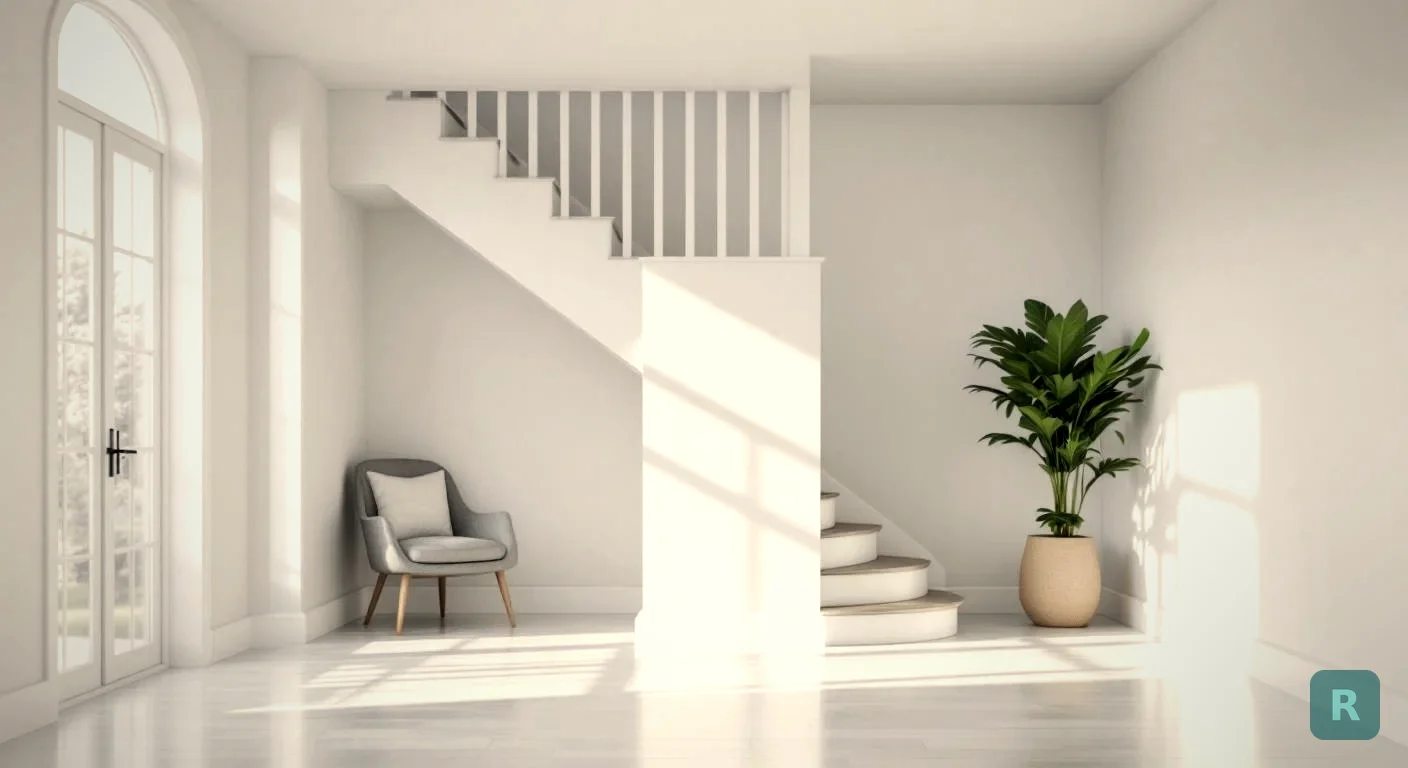
A staircase is the one piece of your house you touch every single day and rarely think about. Then one morning you notice the carpet is shot, the railing wobbles, and the treads creak like an old porch. Suddenly it’s a project.
I’ve remodeled enough staircases to know the gap between what homeowners expect to spend and what the work actually costs. The number usually surprises them. So does the timeline. Let’s walk through what a real staircase remodel looks like, what drives the price, and how to see the finished result before you commit.
- Most staircase remodels run $1,500 to $10,000+ depending on scope
- Material choice and stair type drive 60% of the budget
- Older homes hide rot, squeaks, and code issues you can't see until demo
- Visualize the new design before you sign the contract
Why Staircases Get Overlooked
Most people remodel a kitchen or bathroom and forget the staircase exists. Then the new floors go in and the staircase suddenly looks like a relic from 1987. It happens on almost every whole-home project I’ve worked on.
Staircases are a focal point. They’re the first thing someone sees when they walk in your front door. A tired staircase next to a brand new floor screams “we ran out of budget.” That’s why I tell clients to plan the stairs into the project from day one, not as an afterthought when the rest is finished.
The good news is a staircase update can be one of the highest-impact upgrades in the whole house. The bad news is the price range is wider than most people expect.
What a Staircase Remodel Actually Involves
A staircase remodel can mean five different things depending on who you ask. Knowing which scope you’re dealing with matters because the price gap between them is huge.
- Refinish only. Sand and stain existing wood treads. Repaint risers. Maybe new carpet runner.
- Tread and riser replacement. Pull off old treads and risers, install new ones over the existing stringers.
- Railing and balusters. Swap out the handrail, newel posts, and balusters for a new style.
- Full rebuild. New stringers, treads, risers, railing. Essentially a new staircase on the same footprint.
- Reconfiguration. Change the shape, location, or direction. This is a different beast and involves framing, permits, and engineering.
Most homeowners want something between option 2 and option 3. That’s where the sweet spot lives for visual impact without rebuilding the whole structure.
Real Cost Breakdown
Here’s what I see most often in the Pacific Northwest. Your market may shift these numbers up or down by 20% or so, but the ratios stay similar.
A budget refinish lands closer to $1,500. A full rebuild with custom millwork and wrought iron can push past $15,000. Reconfiguring the stair location easily blows past $25,000 once permits and framing get involved.
The Hidden Stuff That Wrecks Budgets
This is the part nobody talks about and the part that gets contractors in trouble if they don’t account for it.
Once the carpet comes off, what's underneath is a coin flip. I've pulled carpet on a 1950s staircase and found cracked stringers, creaky treads nailed with finishing brads instead of screws, and water damage from a leak nobody knew about.
The most common surprises I run into:
- Squeaky stringers. The wood frame under the treads loosens over decades. Fixing it means pulling treads and re-shimming or replacing stringers.
- Out-of-code railing height. Older homes often have railings under 36 inches. Touch the railing in any way during a remodel and the inspector wants it brought up to current code.
- Baluster spacing. Modern code requires balusters spaced so a 4-inch sphere can’t pass through. Older homes often fail this. Same rule: if you touch it, you fix it.
- Damaged subfloor at the top or bottom landing. Water and foot traffic do a number on the transition zones.
Build a 15% contingency into the budget. I tell every client this and most still get caught off guard.
Style Options That Actually Work
The two biggest decisions are the railing system and the tread material. Get those right and the staircase looks finished even if you keep the rest simple.
| Style | Treads | Railing | Best For |
|---|---|---|---|
| Modern Farmhouse | Stained oak or pine | White risers, wrought iron balusters | Suburban homes, open floor plans |
| Modern Minimalist | Walnut or dark stained oak | Cable rail or thin steel balusters | Contemporary, urban homes |
| Traditional | Carpet runner over wood | Wood balusters, painted newel posts | Older homes, formal entries |
| Industrial | Steel or reclaimed wood | Black metal pipe rail | Lofts, warehouse conversions |
| Coastal | White risers, light oak treads | White spindles, painted handrail | Beach houses, bright interiors |
The biggest mistake I see is mixing styles by accident. Dark stained treads with white shaker railings can work, but only if the rest of the house supports that contrast. If your floors are a warm honey oak, fighting them with cool gray treads creates a tension nobody wanted.
Visualize Before You Demo
Here’s where I see homeowners freeze up. They’re staring at their dated staircase, the contractor is asking what style they want, and they have no idea how the new design will actually look in their space.
That’s the gap that prompted me to build ReVision AI. Snap a photo of your current staircase, pick a style, and see the transformation in seconds. No designer fees, no Pinterest boards that don’t match your actual space.
I built it because I got tired of clients saying “I don’t know” and then changing their mind halfway through the build. Change orders cost everyone money. Seeing the result before demo day saves it.
Curious how a new staircase would look in your home? Try it free with ReVision AI and run three styles side by side before you call a single contractor.
Timeline: How Long This Actually Takes
Most homeowners assume a staircase remodel is a weekend job. It’s not. Here’s how the typical mid-range project breaks down.
Pick the railing system, treads, balusters, and finishes. Order anything custom. Stair parts are not always in stock at the lumber yard.
Pull carpet, balusters, and railing. See what's underneath. Adjust scope if there are surprises.
Cut to fit, glue and screw down, fill nail holes. Sand smooth.
Set newel posts, run handrail, install balusters to code spacing.
Stain or paint. Multiple coats with cure time between. The stairs are off-limits during this phase, so plan around it.
Total: roughly 7 to 14 days of active work, plus the design lead time. The cure phase is the part that catches families off guard. You really can’t walk on a freshly stained tread for 24 hours per coat.
Before You Hire Anyone
A few things I’d want my own family to know before starting:
- Get at least 3 bids and make sure each one covers the same scope
- Confirm the contractor is licensed, bonded, and insured for stair work
- Ask how they handle change orders if hidden damage shows up
- Verify the railing and baluster spec meets current code in your jurisdiction
- Plan an alternate path through the house during the cure phase
- Visualize the design in your actual space before you commit
The cheapest bid is rarely the right one. Good, fast, or cheap. You can pick two. I’ve watched homeowners learn that lesson the expensive way more times than I can count.
Your Next Five Steps
- Take a clear photo of your current staircase from the bottom looking up
- Open ReVision AI and run it through 3 styles you’re considering. Browse the styles guide for ideas
- Pick the look that fits the rest of your home, not just the stairs
- Get 3 detailed bids matched to that scope
- Set the budget at your bid plus 15% contingency before you sign anything
Walk those steps in order and you’ll skip most of the regret I see homeowners run into. The staircase you use every day deserves a clear plan, not a guess.
Get Design Inspiration Weekly
Fresh room makeover ideas, renovation tips, and style guides delivered to your inbox.
Design tips and inspiration only. Unsubscribe anytime.
Related Articles
Retiling a Shower: When New Tile Is Enough and When It All Comes Out
Retiling a shower? A contractor explains regrout vs retile vs full tear-out, what's hiding behind old tile, what retiling costs, and how to pick the new look.
8 min readAverage Cost of Custom Cabinets: What You Pay Per Foot, and When It's Worth It
The average cost of custom cabinets runs $500 to $1,200 per linear foot installed. A carpenter explains what custom buys you, and when semi-custom is enough.
8 min readLuxury Remodeling: What You're Really Paying For (and What's Worth It)
Luxury remodeling costs more for reasons you can't see in photos. A contractor explains where the money goes, what reads high-end, and what's wasted spend.
8 min read